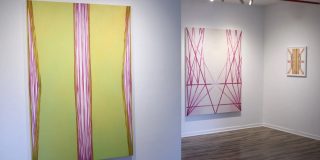
Contributed by Joe Fyfe / Fergus Feehily, who is from Ireland but has lived in Berlin for years, is an unusual contemporary visual artist by virtue of his very careful degree of quiet obliquity. One almost hesitates to approach writing about him and, in this case, writing about his writing. It might be best to get the disclaimers over with: we share gallery representation in Köln, from Galerie Christian Lethert. He recommended me to the gallery, though at the time, long ago, I had never heard of him nor his work. I have since met him a few times. Once we had breakfast at Balthazar in New York and I remember how thoroughly he buttered and spread preserves on two sizable croissants. Feehily is somehow obscure but in plain sight, admired among an informed coterie of artists and collectors and an avid sharer. He does a lot of communicating. He posts on Instagram often, mostly very different kinds of artworks, though he appears to have something of a penchant for religious art. On his website are long year-end lists, an annī of enthusiasms for what he has read and listened to and looked at, whom he has met and spoken with.
Tag: Temple Bar Studios
Studio Visit: Robert Armstrong’s uncanny cohesiveness
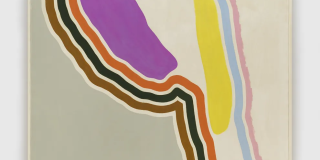
Contributed by Jonathan Stevenson / When the distinguished contemporary Irish painter Robert Armstrong first occupied his space on the third floor of Temple Bar Studios in Dublin 40 years ago, as a co-founder of the complex, the area was subdued and undeveloped, like Soho in the 1970s or Tribeca in the 1980s. Now his studio overlooks a bustling courtyard in what has become a magnet for visitors to the city. In turn, Armstrong himself seems to embrace Ireland’s deep and introverted rootedness as well as its exalted and extroverted role in Western culture while also reaching liberally into other worlds – he has traveled all over, with art in mind, and eagerly plumbed art history – in fluid and delicately gestural canvases that at once fasten onto familiar visual tropes and depart for murkier and more speculative realms. How he manages this tension is, by general description, unsurprising: he makes resolutely abstract paintings that remain firmly underpinned by landscape in line and allusion. He strikes this balance, easier said than done, and even more remarkably sustains it, reflecting a thorough but unobtrusive understanding that, as Colm Toibin puts it in an eloquent essay for a book of Armstrong’s work, “nothing … is free of association.”