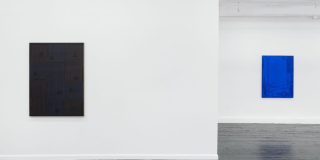
Contributed by Jason Andrew / Hedda Sterne was the only woman made famous by Nina Leen’s photograph The Irascibles for Life magazine in 1951, and the group’s last surviving member when she died at 100 in 2011. While many of those featured in that iconic photograph achieved mythic status, Sterne was consigned to the margins of art history. “I am known more for that darn photo, than for 80 years of work,” she once remarked. Implausibly inventive and unwilling to adhere to a single style nor embrace prevailing aesthetic trends, Sterne didn’t cast herself in the heroic mold favored by the brooding boys associated with Abstract Expressionism.
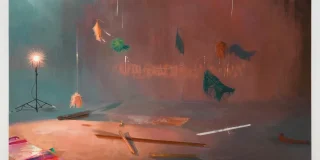
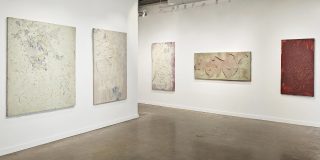
In recent years, Sterne’s work has emerged from museum storerooms around the country, rightfully heralding her as a major figure in the history of American art. Her paintings, on view in “Dreamscapes” at Van Doren Waxter Gallery, flicker with shifting light and fleeting suggestion. Moreover, they reveal a process and style that was always changing. Sterne seemed keen to seek inspiration rather than succumb to the monotony of repetition.

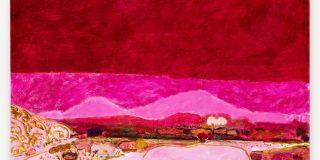
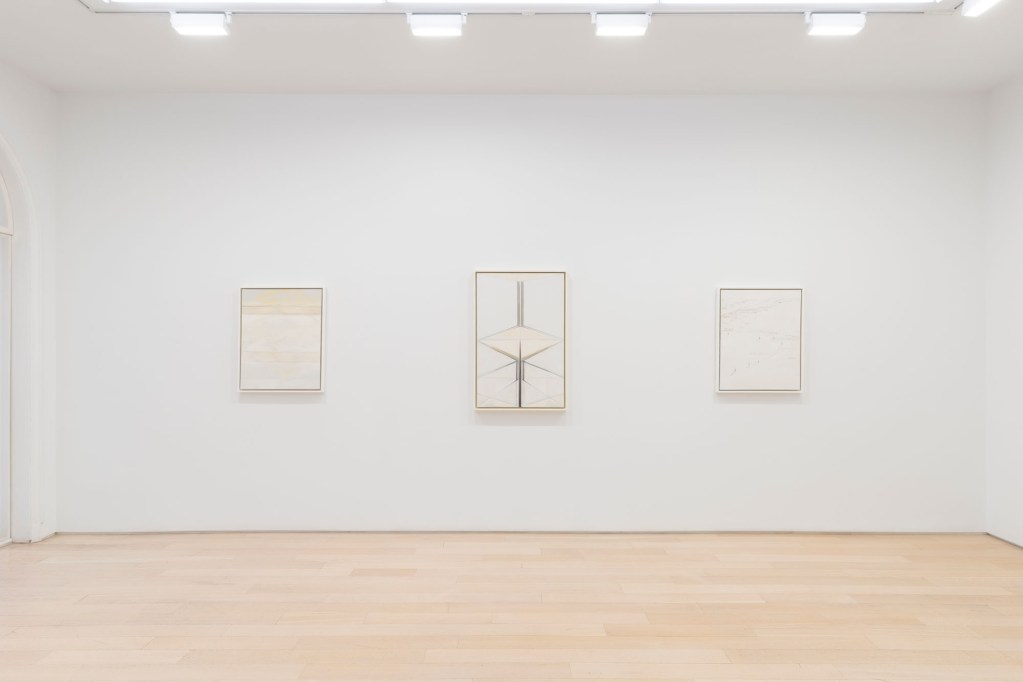
Setting the tone are works from Sterne’s “Vertical Horizontal” series. As that title suggests, these paintings play with the tension between the vertical height of the canvas and horizontal bands of color. In an unpublished interview with Josef Helfenstein in 2002, Sterne explained that she had traveled though all 50 states and painted “big highways” and “lots of roads,” that “became even greater imaginary distances.” It was her ambition “to give a sense of infinite space on a vertical surface. It wasn’t really a horizon, it was a sense of infinite space.”
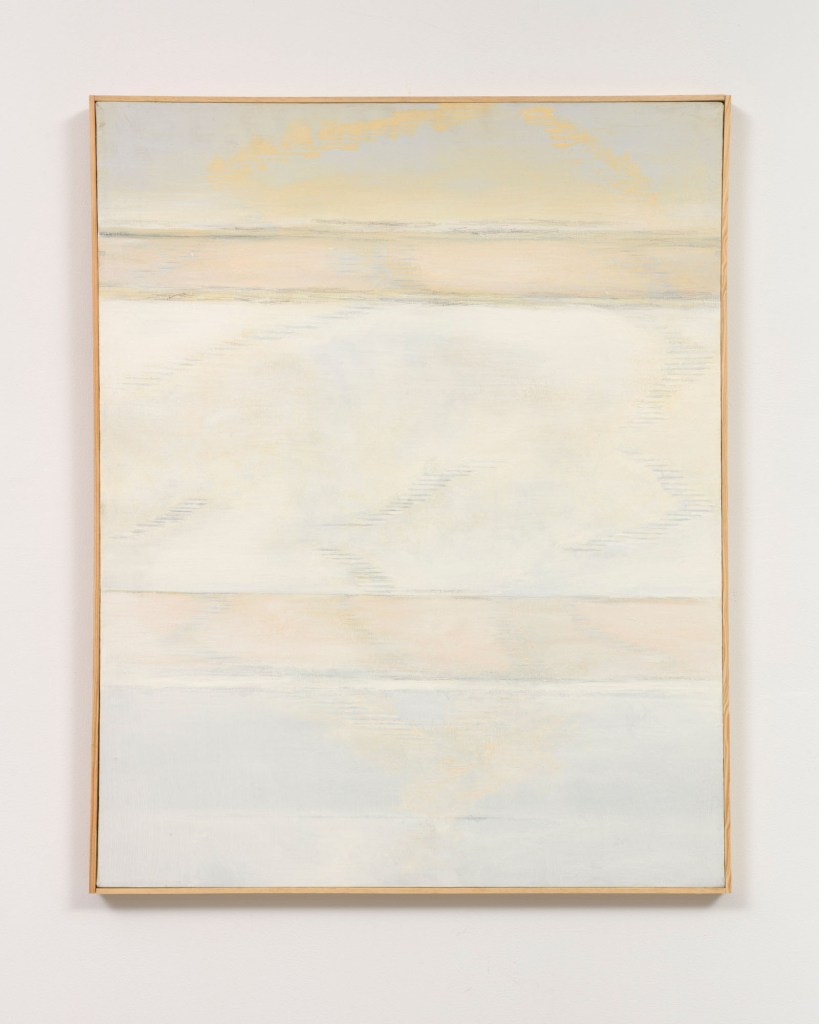
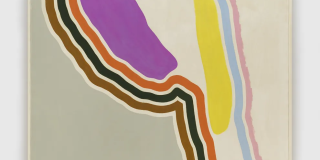
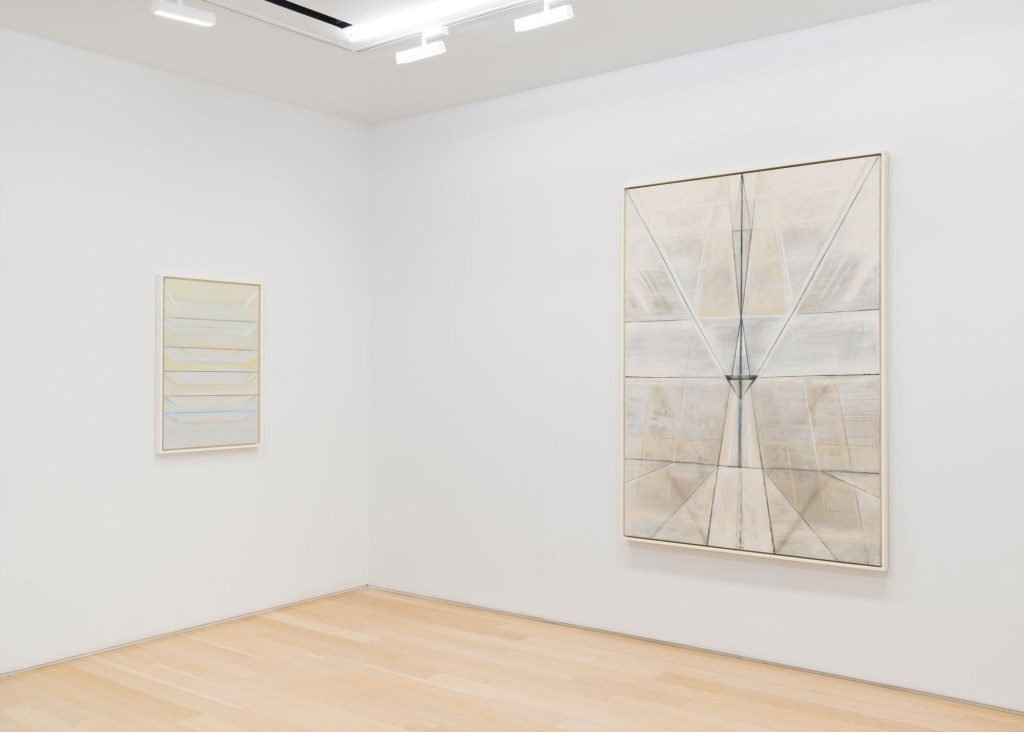
The concept of infinite space lies at the heart of the exhibition. In each varied work, diaphanous lines, measured linear gestures, and whispered forms evolve from a dusty, empty dreamlike space. Color appears sunbaked or sandblasted. It’s as if what is visible has become translucent and corporeal weight has given way to a spectral presence that feels less like a painted object and more like a passing breath. Rather than megaphonic declarations, Sterne offers muted hues that refract across the surface, creating subtle shifts in tone and depth. Like in an untitled 1983 piece, horizontal marks slant and tilt into vivid prismatic planes. Color for Sterne hovers, intersects, and dissolves.

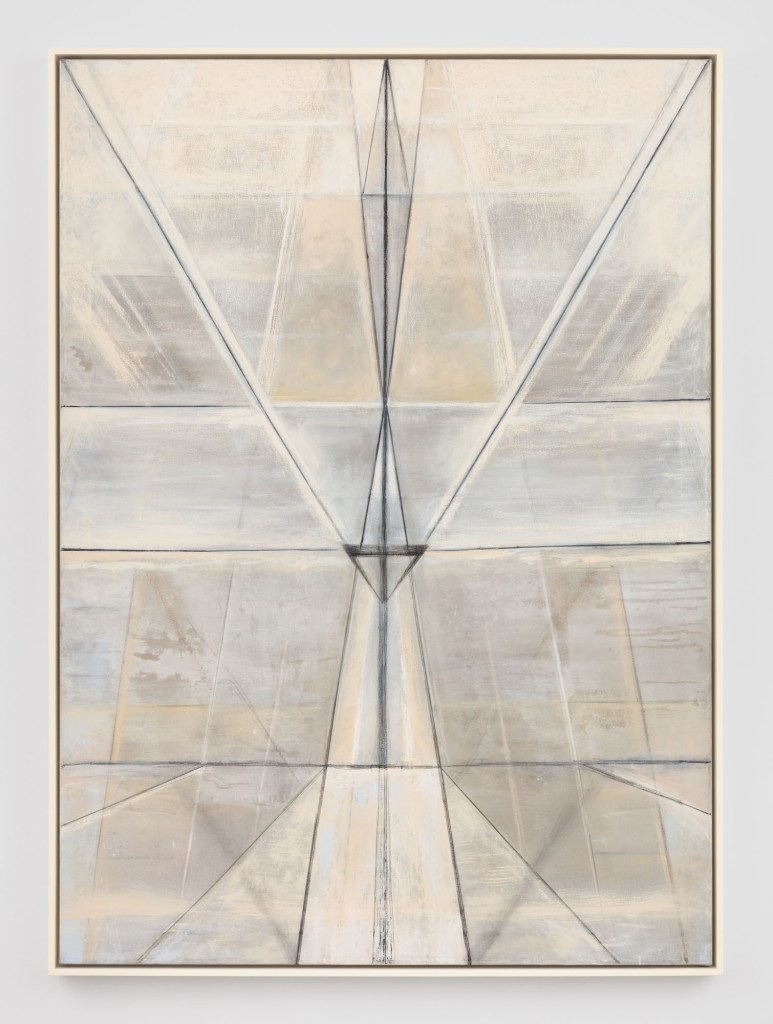
Line was integral to Sterne’s work and she worked for it. The largest painting in the exhibition – an untitled painting from 1985 – manifests extraordinary prismatic restraint and structural discipline. Though inspired by urban architecture – linear frameworks, scaffolding forms, and grid-like intervals – she eschews its literal depiction. Instead, she establishes an architecture-of-perspectives based on the physical layout of the canvas, transformed into a poetic, cathedral-like armature. Space is constructed, destabilized, and reimagined.
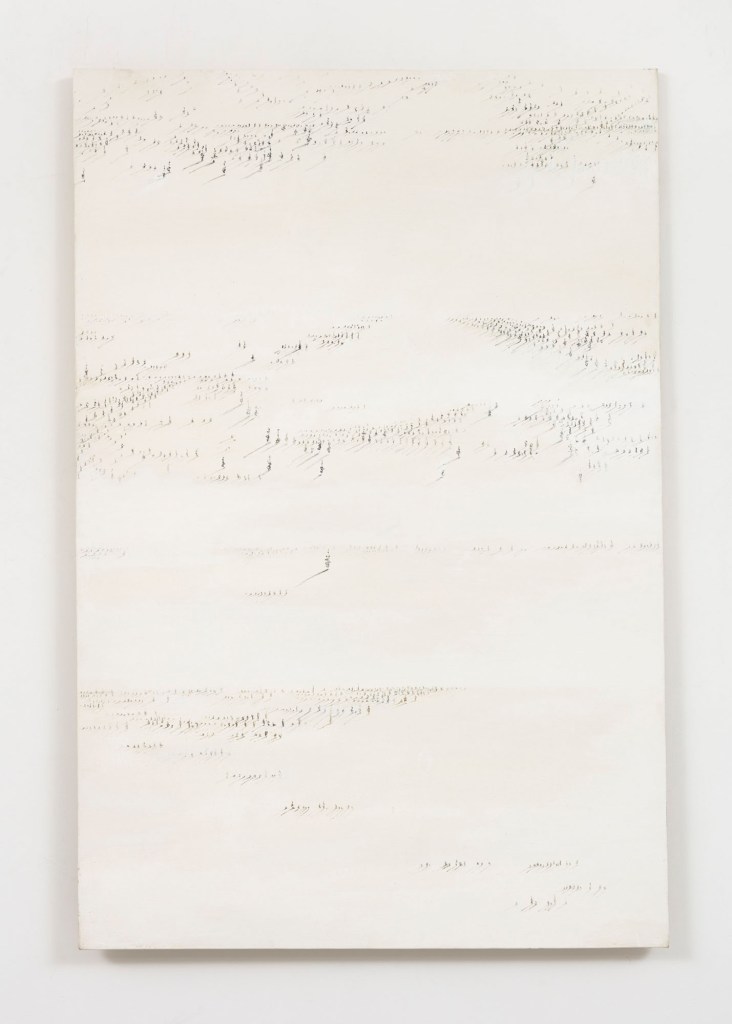
Underscoring her resistance to a fixed style, the exhibition presents a delicate series of paintings titled “Signs.” Rarely exhibited and unique in Sterne’s predominantly gestural and graphic oeuvre, they build on the metaphysical space established by the “Vertical Horizontal” series. Like elegant calligraphy, tiny marks are scattered across the surface. Each seems to cast a shadow that makes it seem totemic and, beyond that, anthropomorphic, like a crowd of revelers assembling or dispersing. “With time I have learned to lose my identity while drawing and to act simply like a conduit, permitting visions that want to take shape to do so,” Sterne said in 2006.
Sterne has long been associated with Abstract Expressionism. Yet in consistently privileging ideas over gestures and treating painting as an inquiry into perception, it’s not hard to see her as a forbear of conceptual art. Her restrained marks, serial investigations, and rejection of expressive bravura positions her paintings less as heroic assertions and more as a sustained exploration of seeing, meaning, and process.
“Hedda Sterne: Dreamscapes,” Van Doren Waxter, 23 West 73rd Street, 2nd Floor Gallery, New York, NY. Through January 23, 2026.
About the author: Jason Andrew is an independent curator and writer based in Cypress Hills, Brooklyn. Follow him on Instagram: @jandrewarts