
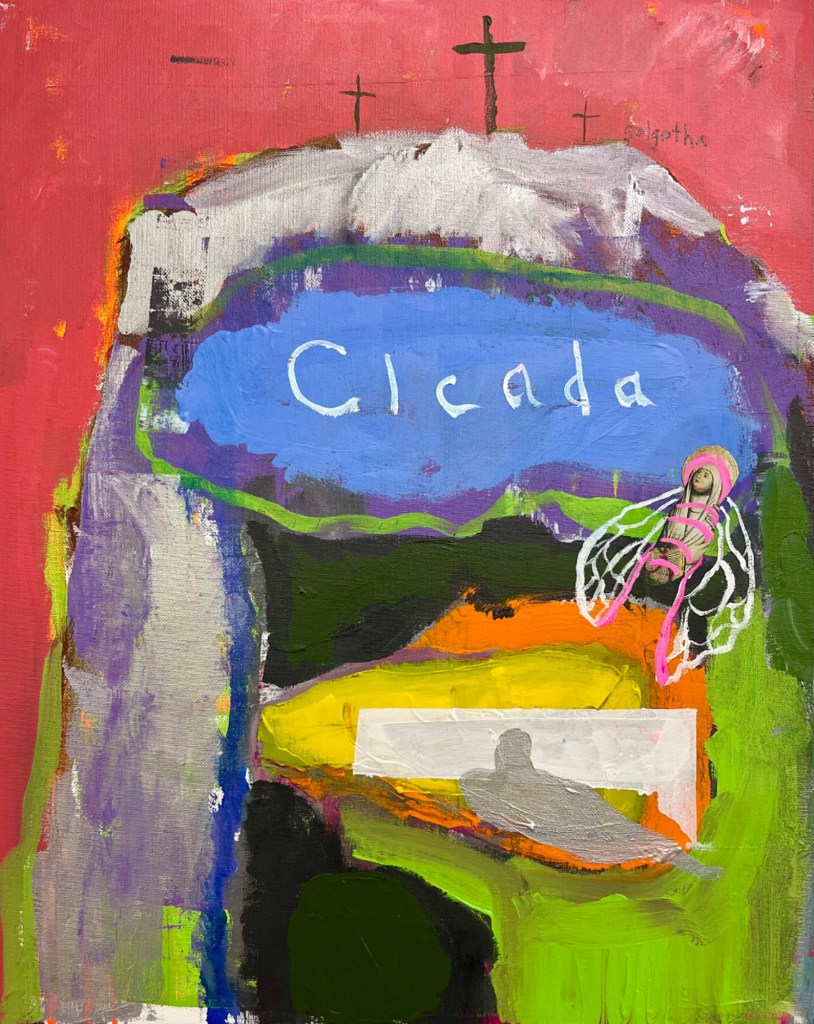
Contributed by Paul Behnke / My wife Garner Behnke, who suffered from debilitating illness and took her own life two years ago this December, was a passionate, funny, intelligent, and talented woman whom I love and miss very much. She wrote wonderful poetry and short stories. She loved her dog Gyp beyond measure. She believed in me and my work and never minded if I woke her in the middle of the night to come and see a just-finished painting, which I was almost always unduly excited about. Garner loved trees – all of nature – and Taos Mountain. I hope she’s there now and part of it all.
What of her glass without her? The blank grey.
There where the pool is blind of the moon's face.
Her dress without her? The tossed empty space
Of cloud-rack whence the moon has passed away.
Her paths without her? Day's appointed sway
Usurped by desolate night. Her pillowed place
Without her? Tears, ah me! For love's good grace,
And cold forgetfulness of night or day.

What of the heart without her? Nay, poor heart,
Of thee what word remains ere speech be still?
A wayfarer by barren ways and chill,
Steep ways and weary, without her thou art,
Where the long cloud, the long wood's counterpart,
Sheds doubled up darkness up the labouring hill.

-Dante Gabriel Rosetti, The House of Life, Ballads and Sonnets
When she died, I was in shock and unsure if I would ever return to painting or to any kind of life that resembled the one I had before. But I did, and my driving realization was that, per James Joyce, absence is “the highest form of presence.” The notion that an absence can be keenly felt became central to what I was making. Moving back to Memphis brought me closer to family, but it was my friend and art school pal Lisa Williamson who gave me the most necessary gift: she opened her studio to me. That act of generosity made the paintings possible. It gave me a place to start, a place where I could face my grief in the language that has always felt most natural to me.


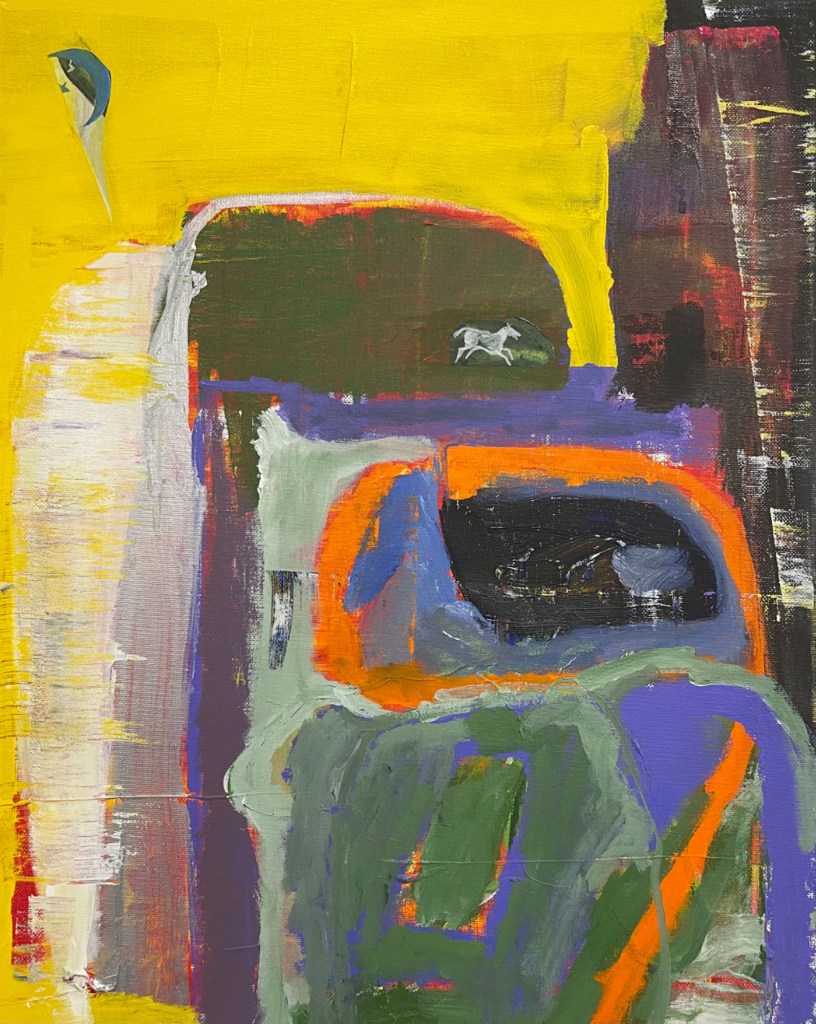
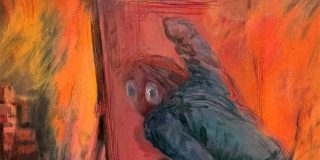
acrylic and collage on canvas, 20 x 16 inches

When I started this series, four months after Garner’s death, I found myself circling the physical location where she died. It was a very large hill – almost a small mountain – directly behind the apartments where we lived, just outside my bedroom window, an unavoidable reminder. I wanted to block it out, but I couldn’t stop staring at it. The hill became a compositional constant that runs through all the work, a shape that anchors the paintings while also recording my experience of simultaneously being drawn to and repelled by the same thing.


Into these paintings I wove fragments of imagery that held deep meaning for us. The images are not arbitrary. Rather, they are personal signifiers. The tiger feels like a protective guardian. The cicada was a personal talisman for Garner, and for me it became a reminder of cycles of disappearance and return, death and rebirth. The horse is emblematic of her connection to the animal and recalls her fondness for the sentimental 1975 hit song Wildfire, which for her carried memory and longing. Religious imagery also found its way into the work – sometimes directly through collage, sometimes by way of a halo or the flicker of a candle. These symbols came from my own searching need to find some thread of continuity between life and death. They don’t resolve anything, but they hold space for longing and doubt.
Formally, the paintings veer between chaos and control. Wide planes of bright color – pinks, yellows, oranges – collide with dark, shadowy areas. Surfaces are layered, scraped, and revised, so that nothing feels stable for long. The instability mirrors the way grief operates: it is consuming, unpredictable, and always in flux. The collaged fragments amplify it, interposing dreamlike ruptures imparting that these are not just abstract voids but places where memory, imagination, and reality blur together.
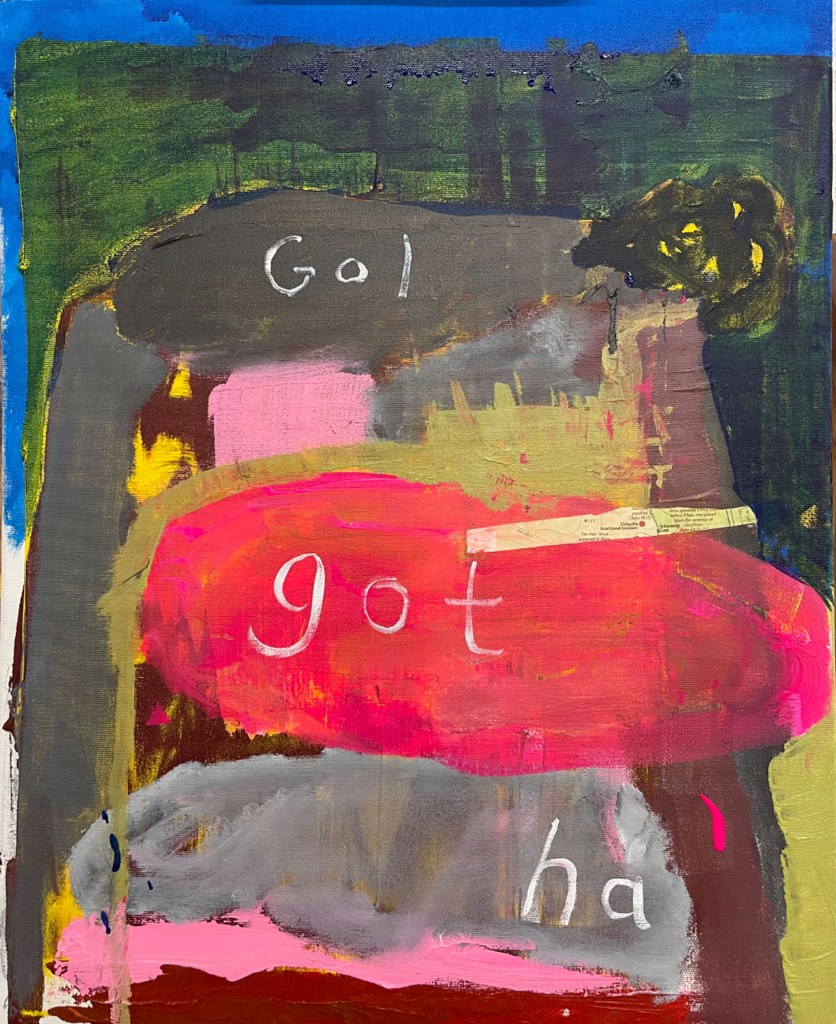

I’ve come to think of these works as thresholds straddling this world and the next. They became sites where I could still encounter Garner’s spirit, but also places where her absence, silence, and the indifference of the universe were painfully clear. Paintings can feel like consoling encounters, or like pangs of loss and abandonment. They never salve grief, but they do hold its contradictions.
While the work began from personal devastation, it is not only about mourning. It is also about endurance and finding a way forward. The very act of painting was a way to keep moving, to push color into the dark, to let images rise from the subconscious. The symbols may be mine, but I hope they reach outward, speaking to others’ experiences of loss, bewilderment, or searching. Ultimately, I don’t see them as fixed memorials. Their effects evolve, just as grief itself does; sometimes it’s harsh, other times tender. In either case, presence persists in absence. These paintings are not only about loss but also about the survival of love and undying connection.
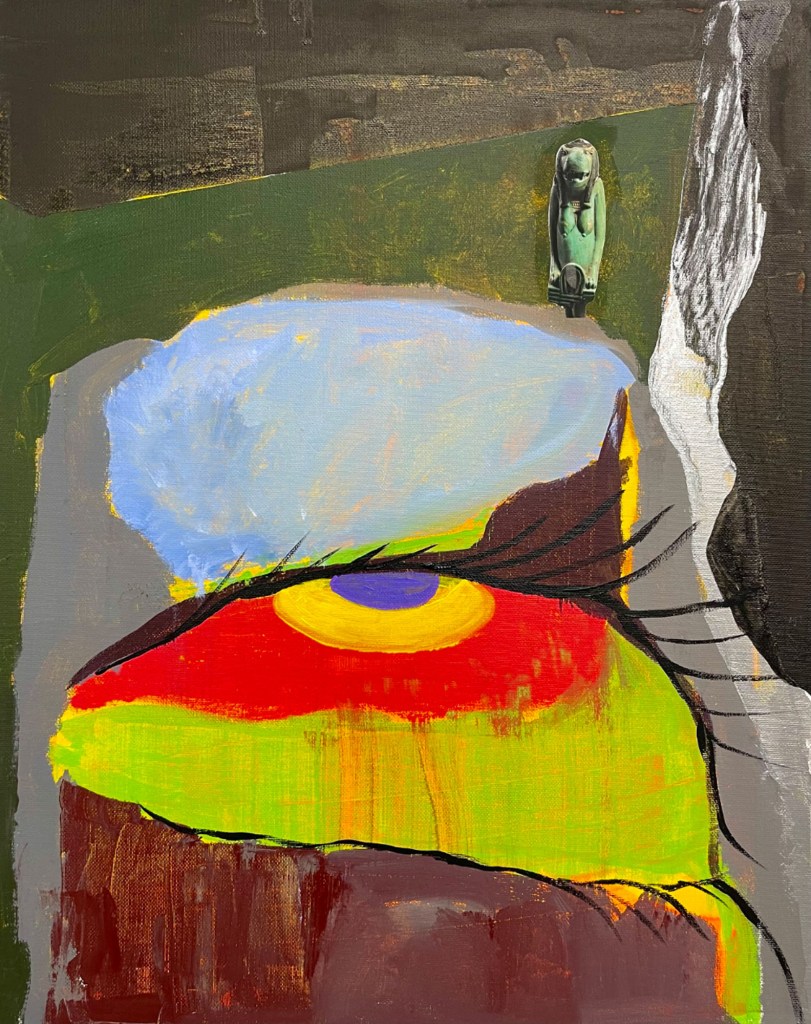
“Paul Behnke, Jodi Brewer, Lisa Williamson: Lines That Move,” Marshall Arts, 639 Marshall Ave, Memphis, TN, 38103 – Sep 06 – Oct 4, 2025
About the author: Paul Behnke is a Memphis-based abstract painter who has also lived and worked in New York and New Mexico.











So moving. Very sorry for your loss. Your wife was always kind and welcoming. These paintings sing love, devotion and memories of a shared life. Best of luck in your return to Memphis.
Painting makes magic from mere reality, great work Paul.
Paul, this work is beautiful.
So sorry to hear this, Paul. These new pieces are all strikingly beautiful. Hope you’ll show in Atlanta again.
Thank you for sharing your loss with us. As I’ve aged, I’ve learned so much loss can occur. Art is a way for everyone to admit their own grief, and in that, you’ve been very generous.
…beautiful tribute, love the paintings !
Listen to OSHO—The Art of Dying…for not only consolation but the essence of existence. 🙏🏻😊
Such intelligent and raw painting, described beautifully. Very moving.
Such a love story on many fronts. Thank you, Paul, for sharing. I didn’t know about Garner’s death until a year later and am still mourning for someone, in the whole scheme of things, I hardly knew. Given the complexity of such a fascinating character, I’m sure I would never have felt I knew her well. Rest, Robin/Garner/Friend. You were special!
Thank you all for your kind messages.