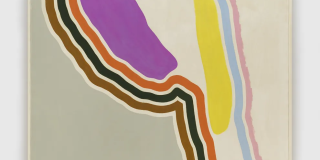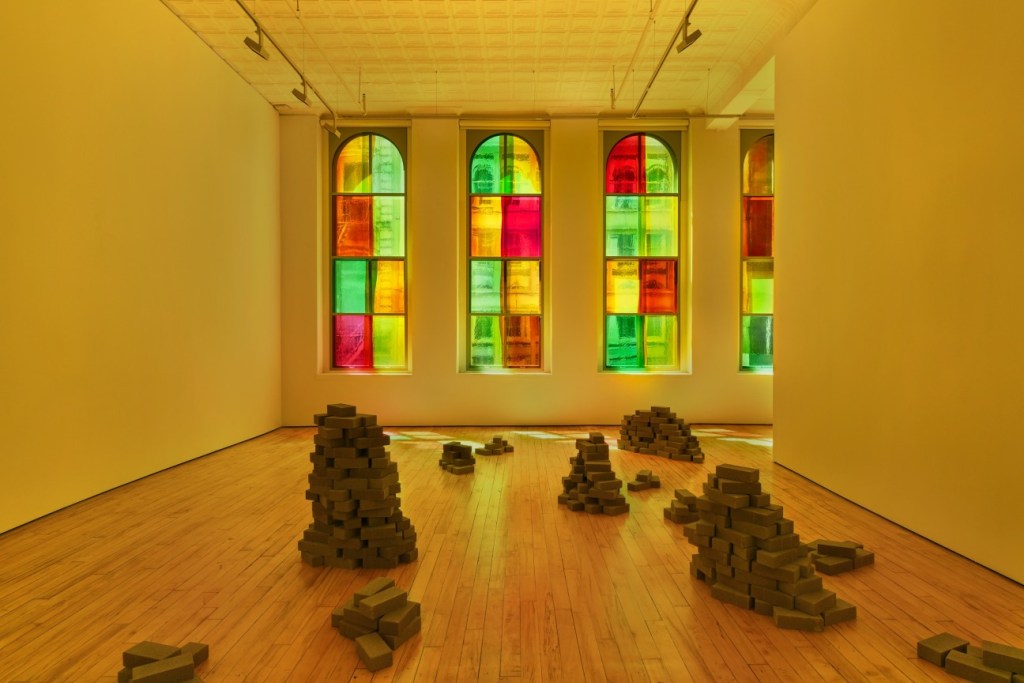
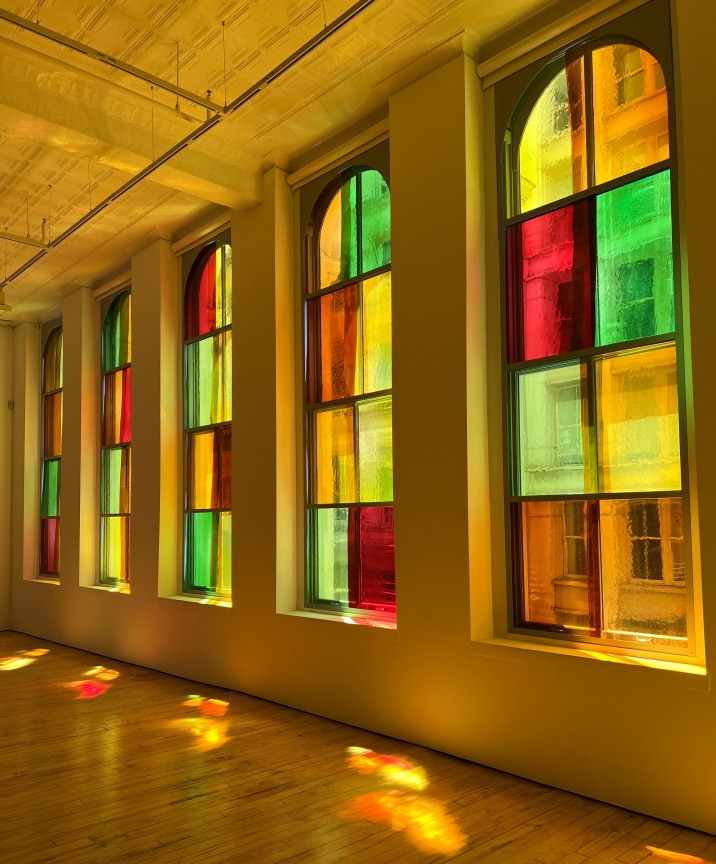
Contributed by David Carrier / Spencer Finch is fascinated by Japan, which he first visited some 50 years ago, when he was a teenager. “One Hundred Famous Views of New York City (After Hiroshige),” his current exhibition at James Cohan Gallery, includes four installations grounded in that experience. Fourteen Stones, inspired by a Japanese Zen garden and made with ordinary concrete bricks, encompasses simulacra of fifteenth-century garden stones. Even these banal objects, Finch suggests, warrant contemplation. For Moonlight (Reflected in a Pond), he has installed stained glass to evoke Japanese moon-viewing. Four LED sculptures present images that recast traditional Japanese haikus through lit color schemes. And Finch’s 42 watercolors reference Utagawa Hiroshige’s renowned One Hundred Famous Views of Edo, made in 1856–58, through present-day New York.
dimensions variable
When you visit a foreign country, it makes intuitive sense to try to translate its language and ways of thinking into terms you can understand. Hence, Finch applies contemporary American ways of thinking to nineteenth-century Japanese art, finding American counterparts to diving birds, boats with white sails, cherry blossom trees, red wooden architectural structures, and traditional Japanese dress. Whereas Hiroshige created One Hundred Famous Views of Edo to celebrate the beauty of Tokyo (then known as Edo), Finch in parallel celebrates that of New York. In thus acknowledging his debt to the Japanese artist, he pulls off a double translation: Hiroshige’s nineteenth-century Japanese style into his own early twenty-first-century American style, and Tokyo into New York.
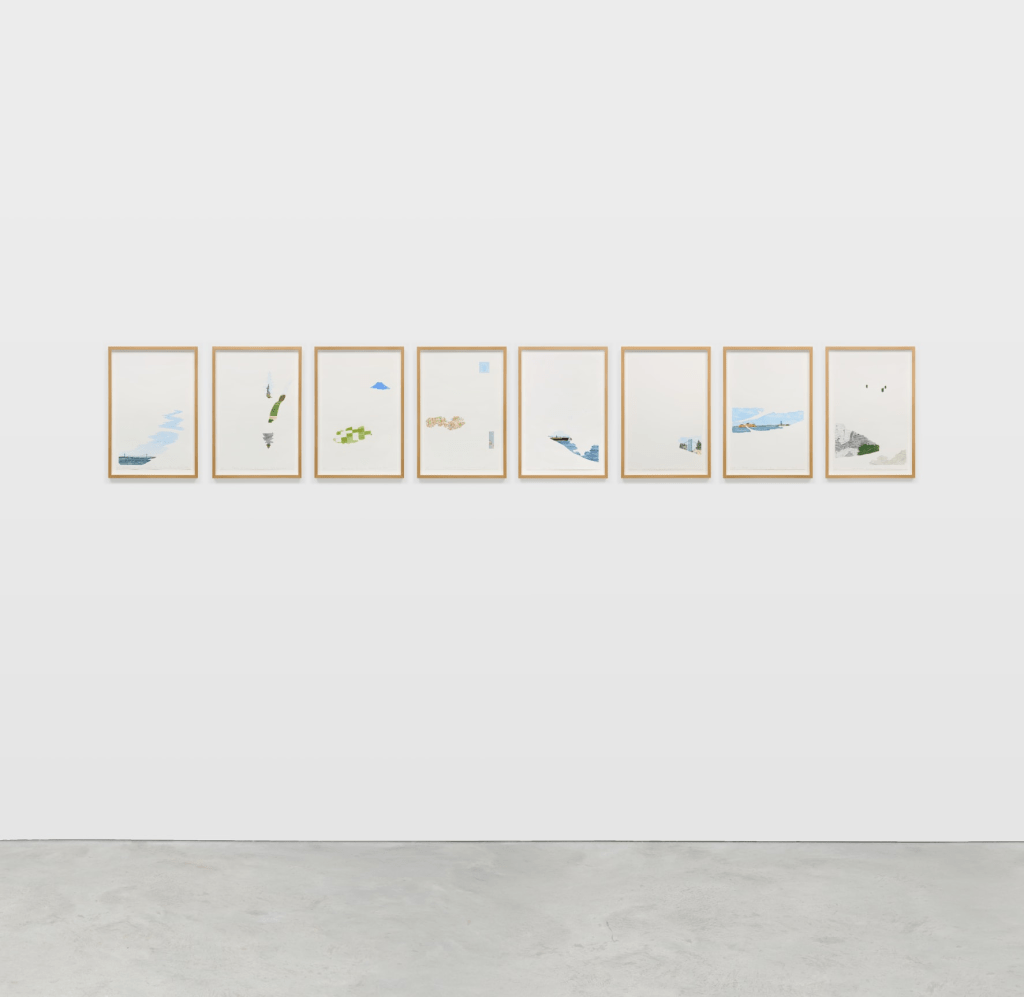
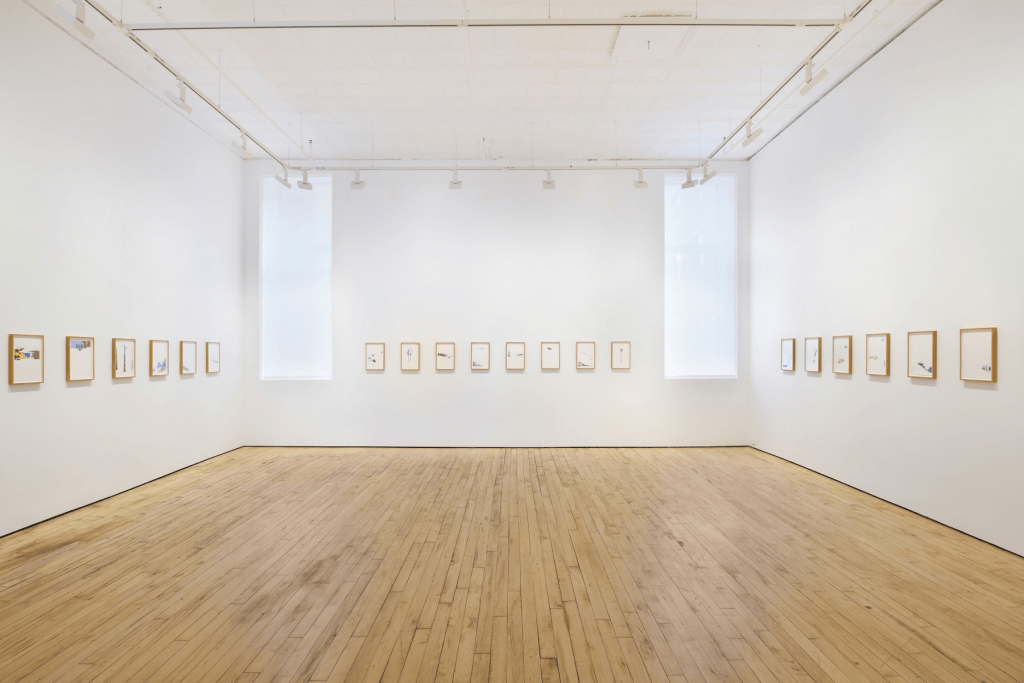
The gallery provides a cheat-sheet of sorts – a large handout superimposing identically scaled maps of New York City and Tokyo, allowing you to identify the New York-area geographic analogues to the sites that inspired Hiroshige’s 42 watercolors. In the spring – the season in which the Japanese painter made them – Finch visited and photographed each of the New York-area locales, including a New Jersey junkyard and the Staten Island Ferry. Then he painted them using the same visual format as the original Ukiyo-e prints, amplifying the effect via cut-out shapes of Tokyo. Quite unlike Hiroshige’s precisely rendered work, Finch’s paintings are austere, often fragmentary, and generally elliptical. But the connection remains deeply grounded in his process.
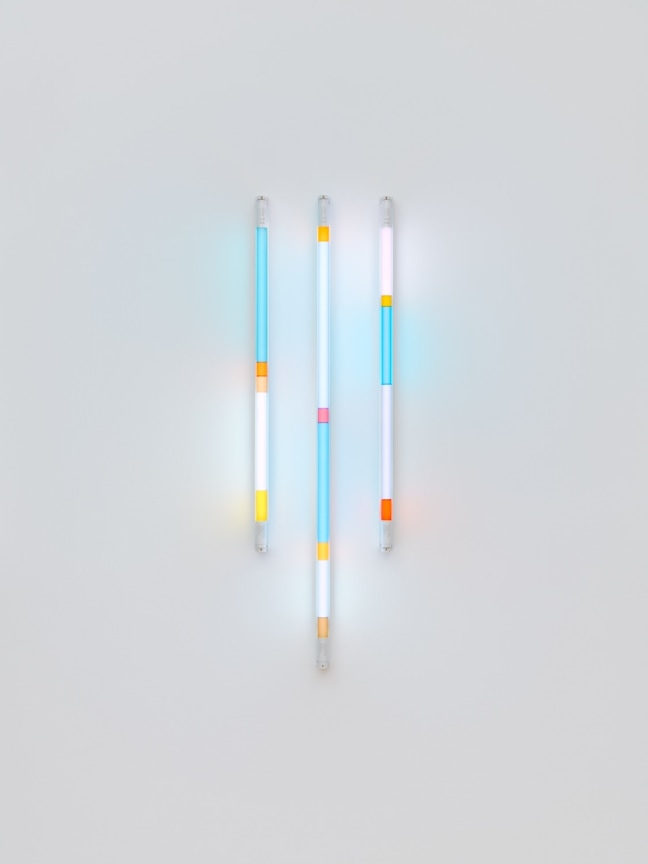
48 x 18 in, 121.9 x 45.7 cm
In 2019, the Metropolitan Museum of Art organized a show of images of The Tale of Genji, the first great Japanese novel, from the tenth century. The idea was to enable a Westerner, reading the book in English, to envisage exotic medieval Japanese culture. Here Finch offers an inventive variation on that task in the form of visual translations of renowned Japanese artwork. His show, like the Met’s, illuminates another culture while demonstrating how distinct it is.

“Spencer Finch: One Hundred Famous Views of New York City (After Hiroshige),” James Cohan Gallery, 52 Walker Street, 2nd Floor, New York, NY. Through October 4, 2025.
About the author: David Carrier is a former Carnegie Mellon University professor, Getty Scholar, and Clark Fellow. He has published art criticism in Apollo, artcritical, Artforum, Artus, and Burlington Magazine, and has been a guest editor for The Brooklyn Rail. He is a regular contributor to Two Coats of Paint.