

John Adams Griefen (b. Worcester, MA, 1942; d. Bergerac, France 2025) was an American artist and early Color Field painter who made important contributions to abstract art in the United States and in Europe. In his successful career as a painter he had seventeen solo exhibitions in New York City, the first at age 27. Foremost, Griefen is known for the essence of color in his paintings, and for many years, he made large, often monumental, acrylic paintings on canvas.
He was represented by Gary Snyder, Lawrence Salander/William O’Reilly, Jill Kornbee, Martha Jackson and most recently Galerie Born, Berlin, Germany. He had more than twenty- solo exhibitions in Boston, Chicago, and Beverly Hills in the U.S., among others; and in Canada, Australia, France and Germany internationally. In 1971, Griefen was one of twenty-eight artists represented in “Lyrical Abstraction,” a definitive exhibition at the Whitney Museum of American Art. He has been in more than sixty-five other group exhibitions in the U.S. and fourteen international shows in Portugal, France, Germany and Australia.


For much of his career Griefen worked and taught painting classes in a loft space on Laight Street in the TriBeca area of New York City, in a building he had converted with a group of other artists. Kikuo Saito and Becca Smith were among his long-standing and closest artist friends and most frequent visitors to Laight Street along with Mark Golden, co-founder of Golden Artist Colors, art dealer, William O’Reilly and Greenberg.
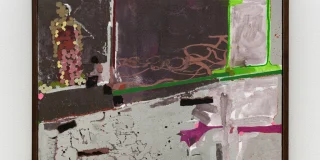
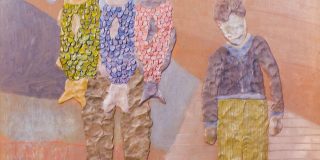
After forty years in New York, Griefen moved to France in 2009 with his wife, Nancy Dawson, living and working on an eighteenth-century farm in the Dordogne. While continuing to paint on canvas, Griefen’s work in France also changed with new materials available to him: paper made by hand and shaped at an eleventh-century paper mill and large Périgordian oak slabs cut at local sawmills. The acrylic paint he applied to these traditional materials created an especially contemporary form of abstraction. This recent work was exhibited in solo and group exhibitions in France and in Berlin.

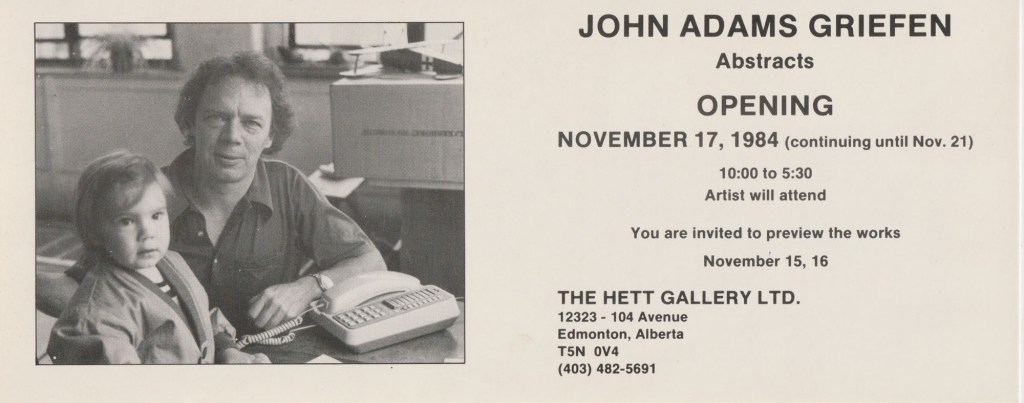
Griefen studied painting at Bennington College, the Art Institute of Chicago, and the MFA program at Hunter College, and he received his B.A. in art history from Williams College. He taught at Bennington during its heyday in the 1960s where he worked with Jules Olitski and he was assistant to Ken Noland and Isaac Witkin, all who became close friends and colleagues. After moving to New York City in the late 1960s, he also assisted other important abstract artists of the time including Larry Zox and Larry Poons, later managing Sir Anthony Caro’s sculptures in the United States.
In 1968 Griefen met the influential art critic Clement Greenberg, who became a champion of Griefen’s work throughout his career and a frequent visitor to the artist’s TriBeCa studio. At 27, Griefen had his first person exhibition at the Kornblee Gallery in New York. In 1970, he was one of twenty-eight artists represented in the defining Lyrical Abstraction exhibition that originated at the Larry Aldrich Museum of Contemporary Art in Ridgefield, Connecticut and traveled to the Whitney Museum of American Art. In the late 70s, Greenberg introduced him to Canadian art critic and painter Terry Fenton which led to a lasting and enriching relationship and helped to establish a strong presence for Griefen’s work in Canada.

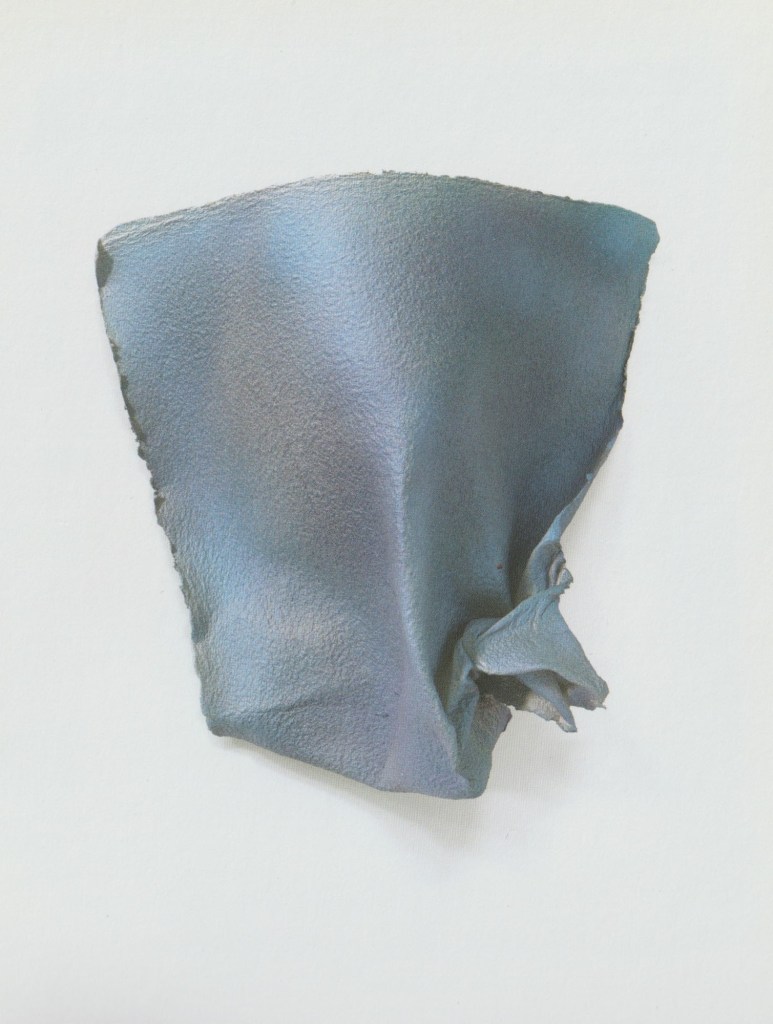
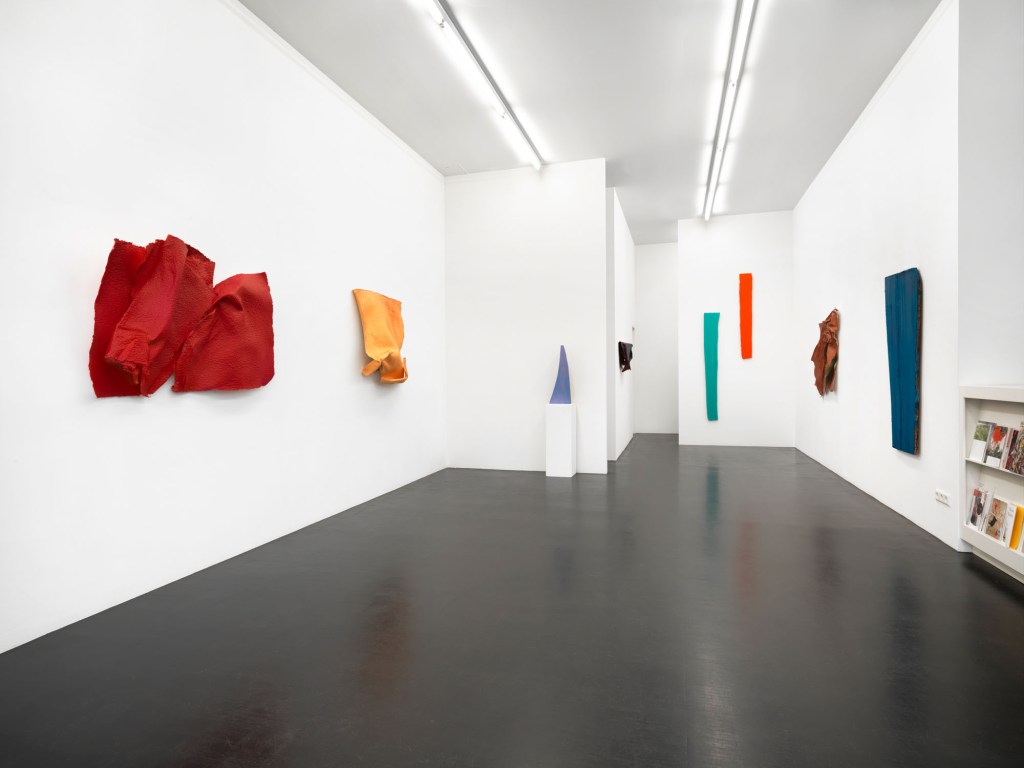
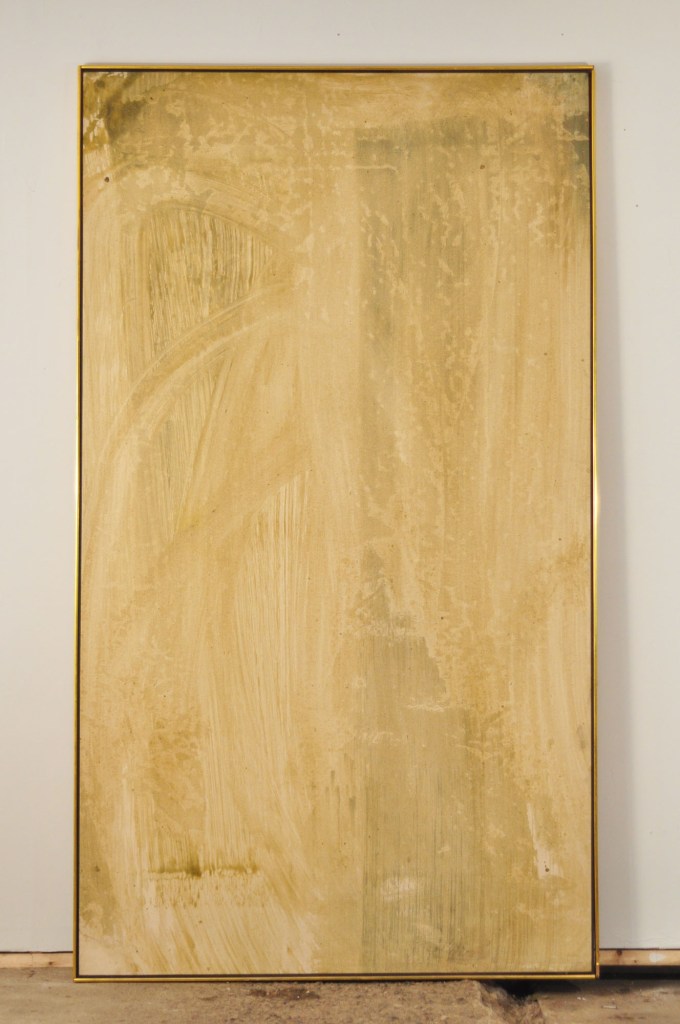

In 1981, the Metropolitan Museum of Art acquired one of Griefen’s paintings. Other acquisitions followed by the Whitney Museum of American Art; Hirshhorn Museum and Sculpture Garden, Washington, D.C.; Boston Museum of Fine Art; Portland Art Museum, Oregon; Carnegie Institute, Pittsburgh, Pa.; Chase Manhattan Bank, New York; Edmonton Art Gallery, Canada; National Gallery of Victoria and the Sydney Museum in Australia; and forty-two other museums, galleries, corporations, universities and libraries. Griefen’s limited edition artist book, VOIR DIRE MALSTROM, is owned by Harvard University, the New York Public Library, New York University, and Dartmouth College. A book of essays and criticism, “The poetry of painting,” was published in French and English by Cahiers de la Galerie .M. in 2012.
On October, 10, 2025, Griefen passed away peacefully in a hospital in Bergerac, France. He is survived by his wife, Nancy Dawson, his daughter Kat Griefen and his step daughters Jennifer Drum and Meredith Drum.
Note: This obituary was provided by the Estate of John Adams Griefen and his daughter, Kat Griefen.








Fabulous, an amazing summation of John’s life and work written with great understanding and much love. I got to know John during the last ten years of his life and both he and Nancy became bosom buddies. I bought some of his work and on everyone of our birthdays he would generously give ny wife, Ashlynne and I more pieces with which we created our own “John Space” in our Dordogne house.
Two of the many pieces that I have give me the most pleasure, the first is a copy of his only book, VOIE DEAR MAELSTROM of which he only had two copies left.
It is a beautiful piece of work and I fell in love with it the moment that I set eyes on it, but the price was beyond my reach at the time and I unfortunately had to say no.
We both shared a love of fountain pens.
After showing me the book he asked me where I was going and I said that
I was going down to the Romanesque church in his village
which has an amazing five second echo in its recently restored vault to play the saxophone, he asked if he and Nancy could come along I very curtly replied that the “church was open to everybody”.
He said could we wait for a couple of minutes be cause he had forgotten to bring something. He duly returned with something that he had hastily wrapped in some old salvaged brown wrapping paper. He proceeded to hand this parcel to me and said, “you really liked this, so I’m giving it to you.”
I Querulously unwrapped the parcel and it contained the book.
“You can’t give me this,” I said.
He looked at me and seconds later thoroughly beat my earlier curt remark by saying;
“It’s mine, I can do what the fuck I like with it!”
The following year I gave him a fountain pen.
He said, “This is your pen.”
I replied, “no, this is your pen.”
“What would you like me to do with it? He asked.
I gave him a blank sheet of A4 paper and asked him to sign and date the paper in the lower right hand corner.
He asked me why.
I told him that I would then mimic one of his sketches and try to sell it.
He did not move from the table and he studied me with eyes for a moment and then suddenly began to perform what I presumed fo be some random scribbling on the paper.
He paused for a moment, took an almost sideways observation of me then almost instantly returned to his attack on the paper.
Stopping suddenly he placed the pen on the table then scooped up the piece of paper which he handed to me.
“Will this do?” He asked.
I was absolutely astounded when I looked at it. In less than half a minute he had drawn a portrait of my head.
No I said, “you haven’t signed and dated it!”
He duly did so and this has become one of my most treasured possessions.
When I showed it to Nancy she said that for as long as she had known him he had only drawn three other portraits.
Not a day now passes when I don’t spare a thought for him.