Tag: Guggenheim

Solo Shows

Laura Newman: Flatness and the illusion of depth

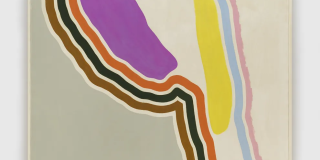
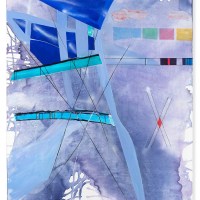
Contributed by Adam Simon / A photographer friend once asked me why painters are always talking about the space in a painting. He wanted to know what this term “space” meant. I talked about the different ways paint on a flat surface could be made to suggest depth, and how the challenge for modern painters was to create depth while also reaffirming the flatness of the support. I probably referred to the elusive concept of the “picture plane” and how simultaneously maintaining mutually exclusive ideas – flatness and depth – could produce a poetic or even a mystical dimension in visual art. Most abstract paintings present shallow space, keeping depth to a minimum. This type of painting is usually non-hierarchical; nothing feels more essential than anything else. The viewer’s eye tends to scan. If you want to both represent depth and reaffirm flatness, shallow space is going to be easier to handle than deep space.
Solo Shows

Francesco Clemente’s visual facility

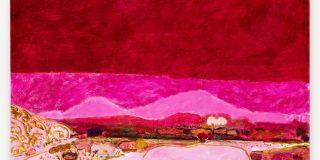
Contributed by David Carrier / I have been writing a book about art in the churches of Naples’ historic center. There I also visited the new Kunsthalle Madre, which contains an elaborate two-story permanent installation by Francesco Clemente called “Ave Ovo.” Like baroque Catholic art, Clemente’s work features elaborate symbolism. While the old masters employed it to present church dogma, his symbolism is personal and more elusive. In Naples, however, both exhibit a penchant for sensory overload: more is more. In his splendid show “Summer Love in the Fall,” now at Lévy Gorvy Dayan, Clemente still uses some of the same symbols – male and female body parts, his own portrait – but the colors in its 23 paintings are more subdued. The title may well refer to the psychic place of erotic images in his later life as well as the timing of this exhibition, for now his work seems more serene. 

Solo Shows

Morandi’s pointed timelessness

Contributed by David Carrier / Giorgio Morandi was born in 1890 and died in 1964. After the 1910s, when his art had some affinities with that of Giorgio de Chirico, he painted only still lives – bottles or flowers – and landscapes. “Time Suspended, part II” at Mattia de Luca Gallery, part I having been staged earlier in Italy, is a blessedly large presentation of 45 paintings and fifteen works on paper that reveals how little other artists or current events – indeed, anything outside of his studio life – affected his work.