
Contributed by David Carrier / To be a happy art critic, perhaps you need to be ready to fall in love – at least with a picture. I have a friend, a very distinguished intellectual, who some years ago fell in love with a famous work of art. He has read all the literature about this picture, written about it, and made repeated pilgrimages to see it. On one occasion, curious about his obsession, I accompanied him to take a look. I certainly admire his picture; it’s an exceptionally fine, much appreciated painting. But it’s not my painting. Talking with him about our experience, I returned to a scene from Marcel Proust’s Remembrance of Things Past in which the narrator shows his best friend a photograph of his true love. His buddy is honestly puzzled. “That’s the woman you are always talking about? Her?” That’s the marvelous thing about love. In my experience, you don’t love someone because they are objectively desirable. You fall in love because the object of your ardor is your own ideal other. It’s the same with art.
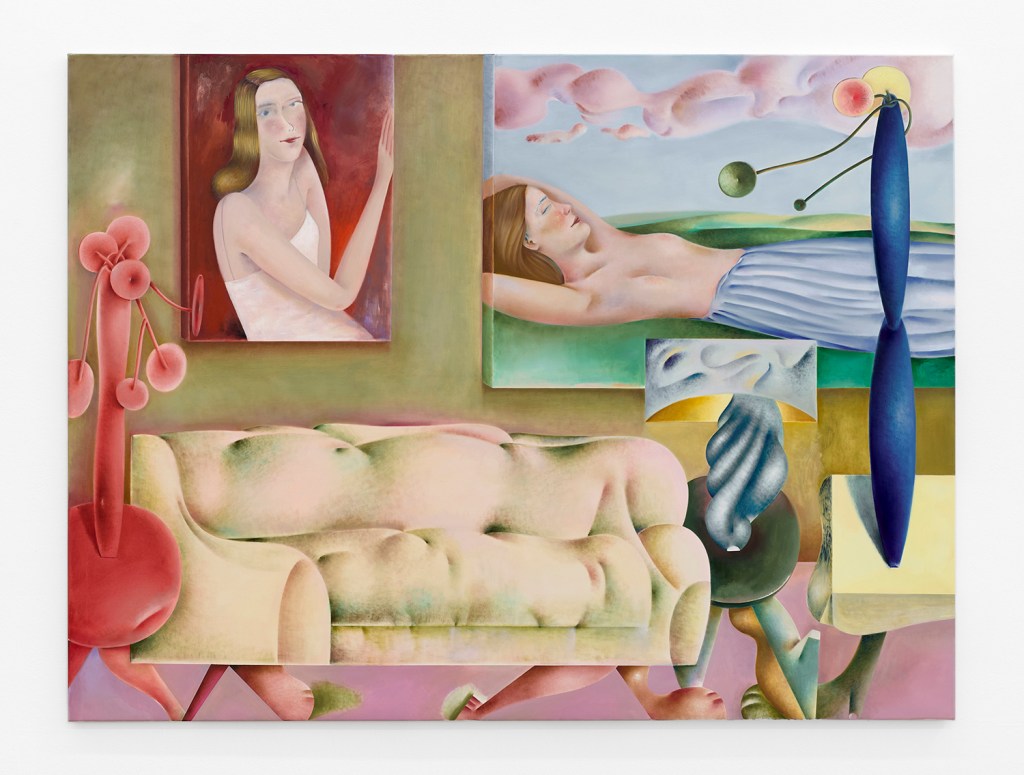

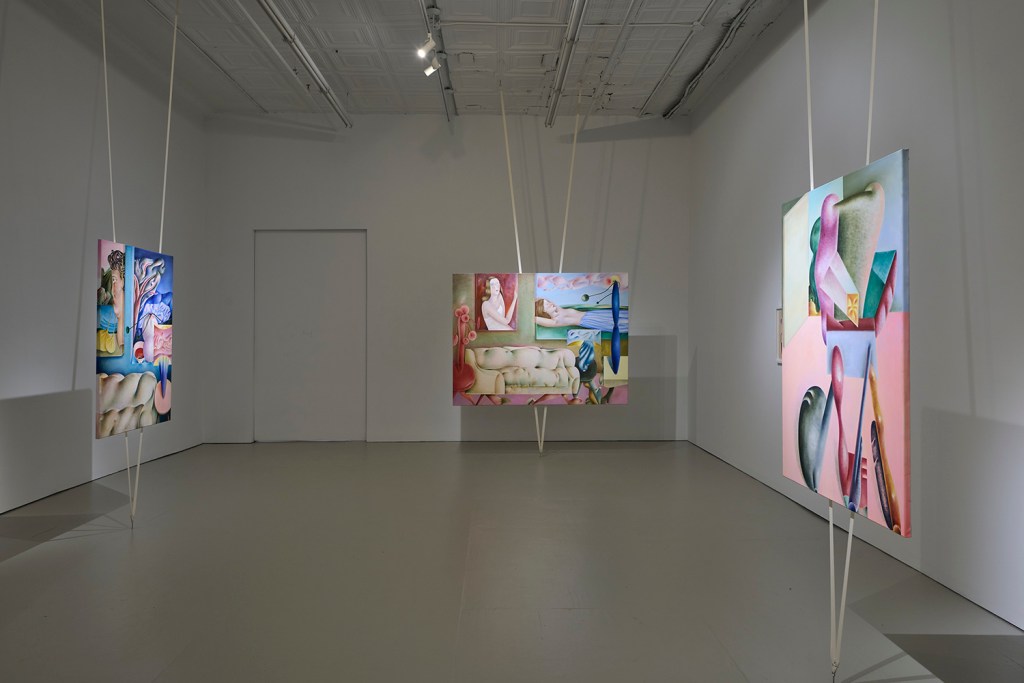
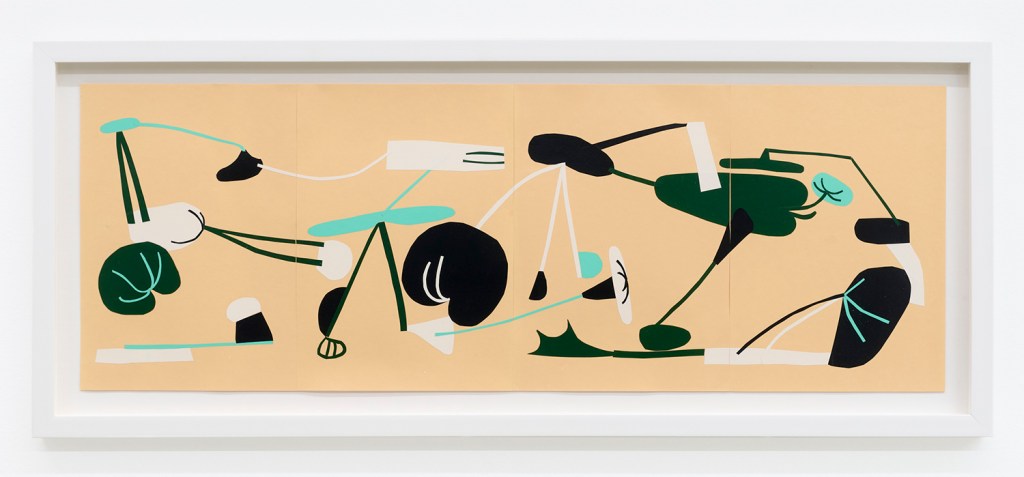
I walked into The Hole on Walker Street and there was Pablo Benzo’s And Then She Did What She Did. Imagine that Rene Magritte and Henri Matisse collaborated, and you will comprehend something of its effect, poised between surreal and fauvist. Benzo is a Chilean painter who works in Berlin. I’d never seen his work before. This show includes five paintings and six small works on paper, all recent. According to the gallery’s statement, Benzo was inspired by Peggy Guggenheim’s collection. I’m not entirely sure which works he had in mind. It doesn’t matter, because here he’s made completely original works, whatever their remote sources. And what a flesh-filled picture he’s created in And Then She Did What She Did. I’m fascinated by the three pictures within his picture, and by the vertically mounted blue propeller at the right-hand edge. The exhibition title – “Time Traveler and Other Fragile Detours” – seems to allude to the artist’s interest in early twentieth-century modernism, but his painting doesn’t look much like anything I know from that era. I certainly don’t quite get what’s going on at the bottom, with all that pale flesh above a pink floor. It didn’t matter. In the gallery, I stopped, spellbound, and told the gallery director, “I’d like to purchase it.” Love can be possessive. He must have been puzzled; I hardly look like a collector.

It happened that I was looking at the painting with my best friend, who knows my tastes inside and out. I was aware that my verbal behavior puzzled her, and I didn’t dare spoil the moment by asking her opinion. When we exited the gallery emptyhanded, I felt a little relieved, having survived a momentary obsession without incurring material harm. I remained delighted to have had the moment, though. If you can’t fall in love with a painting, you may well have a contented, well-rounded personality and be a better person than I, but you’ll never fully understand visual art. That moment I have described – fragile, brief, all happening before I myself understood what was going on – involved a totally involuntary reaction. I trusted only my feelings.

“Pablo Benzo: Time Traveler and Other Fragile Detours,” The Hole, 86 Walker Street, New York, NY. Through October 11, 2025.
About the author: David Carrier is a former Carnegie Mellon University professor, Getty Scholar, and Clark Fellow. He has published art criticism in Apollo, artcritical, Artforum, Artus, and Burlington Magazine, and has been a guest editor for The Brooklyn Rail. He is a regular contributor to Two Coats of Paint.







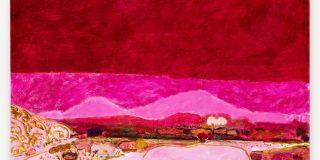
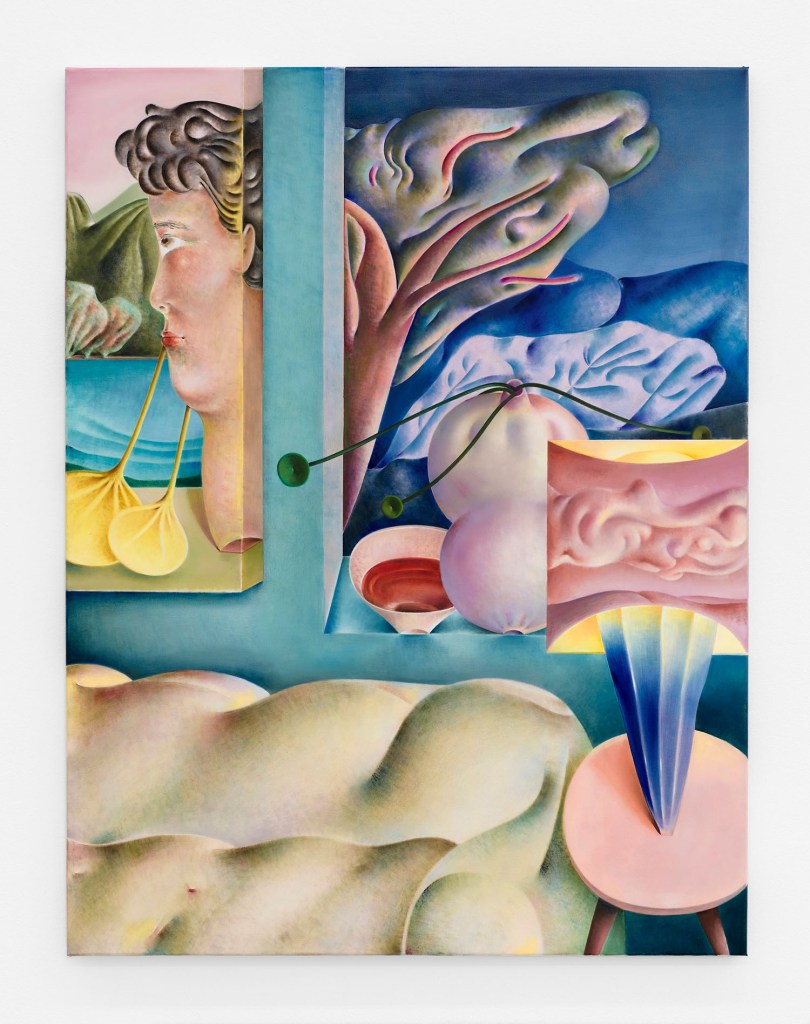
Just from seeing these paintings in this article makes me want to see more of this artist– they are gorgeous works- I love their ambiguity and complex compositions. ! Thank you for introducing them.
Consciousness of Coors stands out to me because of its abstract nature and volumetric forms—a treatment of shape that the painter handles skillfully, as seen in other works. The narrative feels whimsical, yet it also seems to reject a rational understanding of reality. Instead, it invites the viewer into a space governed by intuition, imagination, and emotional resonance. The ambiguity of the forms allows multiple interpretations, suggesting a reality that is fluid rather than fixed, more felt than logically constructed. In this way, the painting challenges traditional modes of perception and opens up a dialogue about how we engage with meaning itself.