Contributed by Adam Simon / Carey Young’s exhibition “Appearance” at Paula Cooper is the latest installment in her more than 20-year artistic examination of the law as an institution. She is a leading progenitor of a growing cohort of artists who use research and analysis of institutions and systems in their work. In a video on the gallery website, Young states, “Law is too important to be left to lawyers… There are many ways to talk about it that haven’t been addressed.” Other reviews have focused on the information transmitted through the photos and video in the show. There remains the fundamental question of how, or if, an art exhibition can talk about a subject as prosaic as law in a constructively different way than a written or spoken medium. Does the language of visual art engage thought differently?

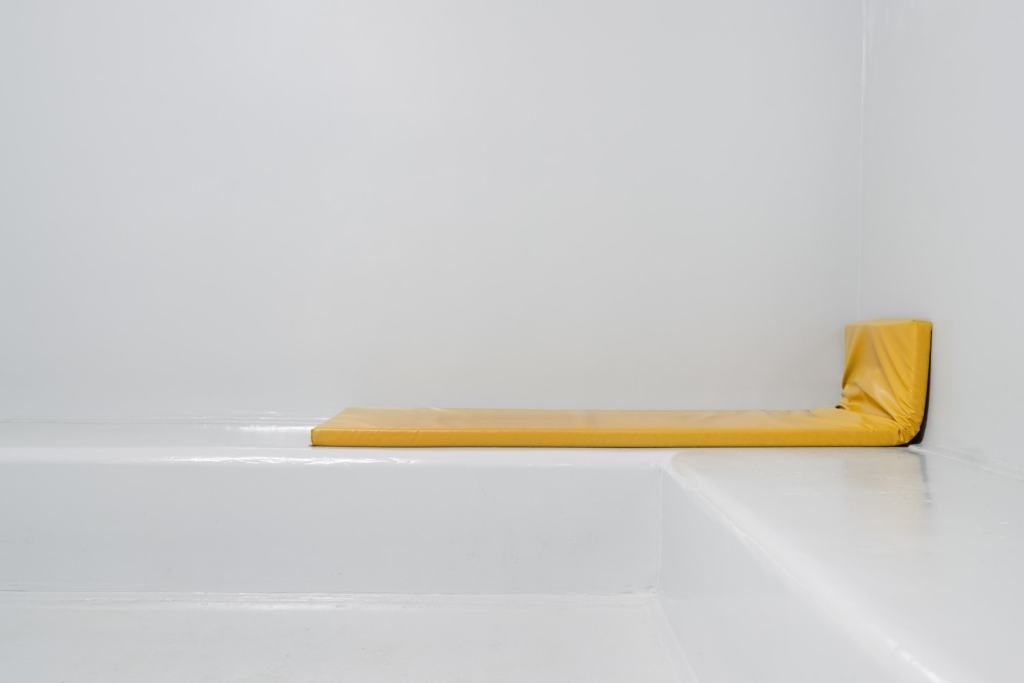
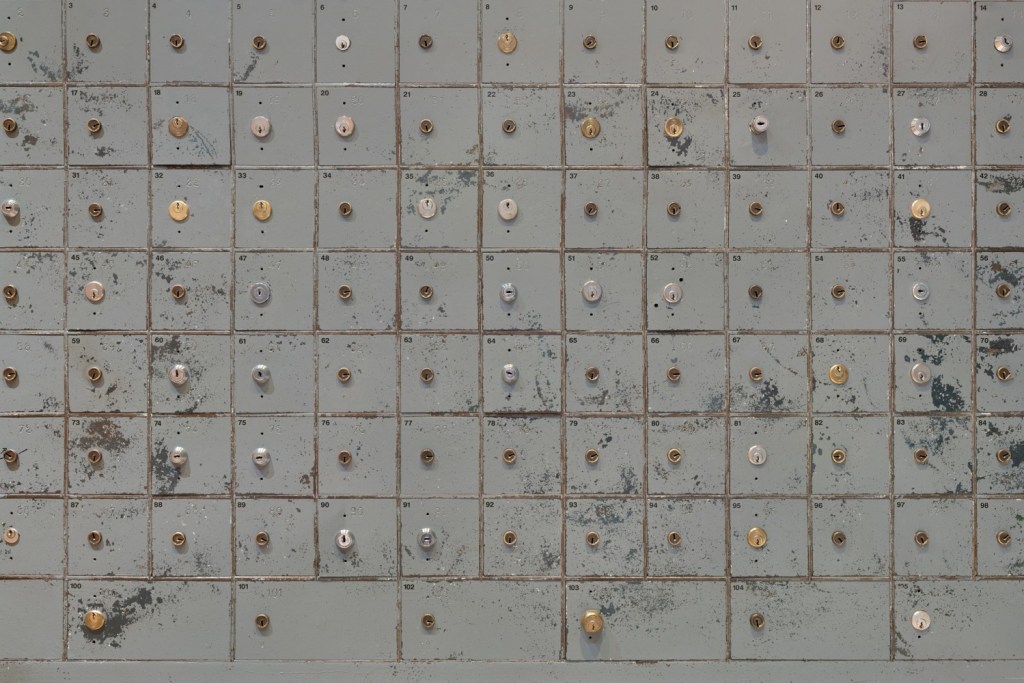
The exhibition begins with a room of six framed photographs. One has a sense of having seen them before, a sampling of Minimalist architecture, a grid of locked boxes, corners of rooms where floor meets wall, and, in two photos, a shelf with a sleeping mat. Two of the shots include painted footprints and handprints on a floor and wall, cluing us to the fact that more is being documented than clean lines and institutional emptiness. The footprints and handprints are evidence of coercion and proxies for human subjects. All the photos were taken at different sites of incarceration in Europe. It is tempting to deduce a relationship between Minimalism and power, and the gallery’s press release seems to suggest as much. Resisting this kind of binary correspondence, however, may get us closer to the different ways of talking that Young referred to.
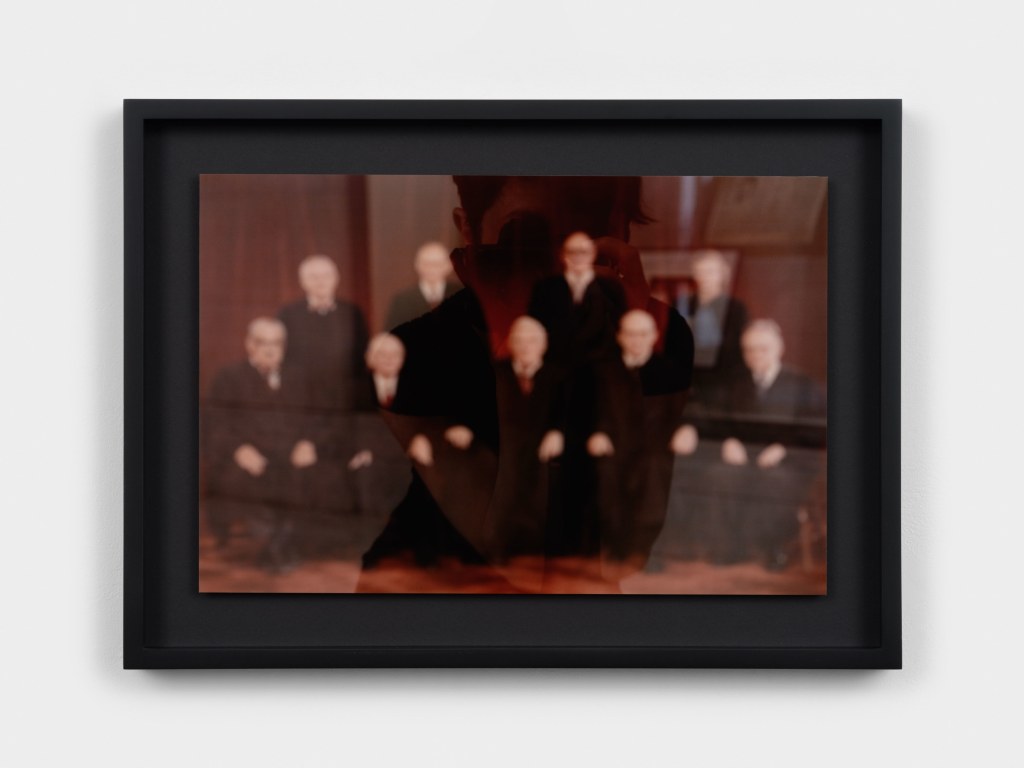
Two more photographs complete the still-image portion of the exhibition. In the reception area, there is one that resembles an Ab-Ex monochrome painting but is in fact a close-up of the red velvet covering of the judges’ bench at the International Court of Justice in The Hague. Outside of the large gallery displaying Young’s video Appearance is a photo of a framed photo. The photo depicted is an official portrait of the U.S. Supreme Court from 1981, which included Sandra Day O’Connor, the first female Supreme Court justice, who died last year. The photo-within-the-photo is blurred, the camera focused instead on Young’s reflection in the glass of the frame, taking the picture.
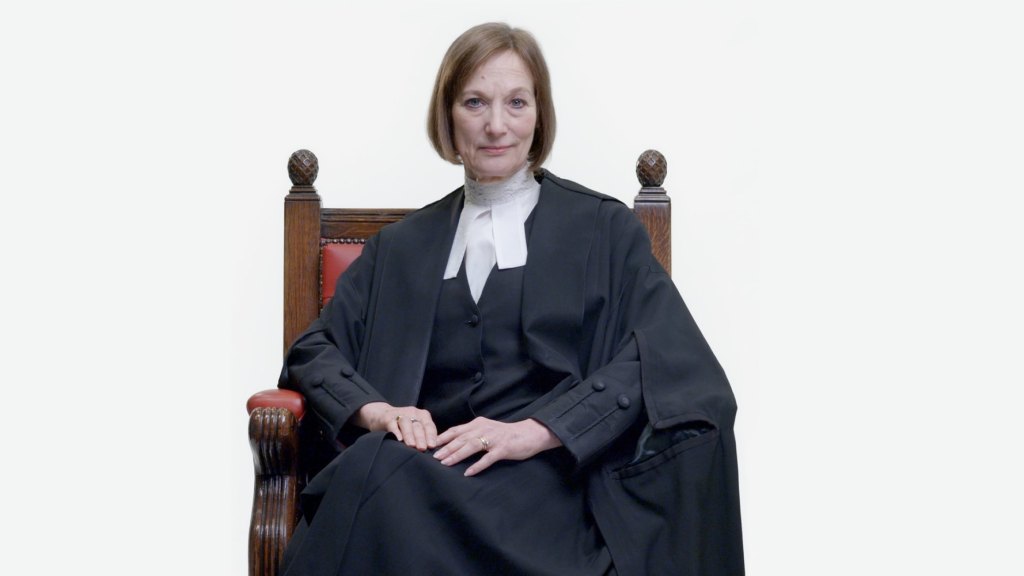
Inside the large gallery is the video, composed of silent portraits of fifteen ethnically diverse female British judges. To prepare them for the video sessions, Young told them about Andy Warhol’s screen tests from the 1960s. Warhol’s screen tests were partially inspired by police mug shots, so in a sense the video evokes both ends of the judicial spectrum. The judges sit in their court robes and stare into the camera. It initially holds their gaze but then moves to languidly scan different aspects of their attire and appearance – jewelry, shoes, fingernails. These details remind us of their (unofficial) humanity. Like us, they select what to wear. On the United States Supreme Court, the three liberal Supreme Court justices are women, and all but one of the six conservatives are men. It’s possible to see this video as quietly prescriptive, suggesting an idealized, more humane, more diverse, and perhaps mostly female judicial system.
Prescriptive or not, I think the key to this exhibition is that no point of view is deliberately stated. We are not given politics or morality per se, nor exactly evidence. As an exhibition in an art gallery, we are invited to look and to take our time looking. The judges in the video are not judging. We are judging them, their demeanor and attire, how often they blink, whether there is the hint of a smile, how severe they are, how relaxed. The video differs from the photos both in the duration of its observation and in how forgiving it is of its subject. We like these women. The exhibition echoes past art – Andy Warhol and Bill Viola, architectural photographers like Ezra Stoller or Judith Turner, architects Mies van der Rohe and Le Corbusier, gestural abstract painting. All these echoes evoke a language distinct from the language used to enact and prosecute law, or to assess the law and its effects.

“Appearance” is an act of translation. As in most such acts, some words in one language don’t have direct counterparts in the other, some ideas are inexpressible, meanings shift and slip. We are informed through our senses, through looking. The photos of carceral spaces contain no guards or inmates. Everything leads away from the formation of fixed ideas or even definitive thought. We take it all in, slowly, and the splaying of time that comes with looking does, in my mind, constitute a different way of thinking or talking about the law.
“Carey Young: Appearance,” Paula Cooper Gallery, 534 West 21st Street, New York, NY. Through February 17, 2024.
About the author: Adam Simon is a New York artist and writer. His recent paintings combine corporate logotypes, stock photography, and tropes of modernist design.