Contributed by Jonathan Agin / The fifth annual “La Banda” show at Tappeto Volante Projects in Gowanus features relatively new paintings, sculptures, and works on paper by over three dozen mostly local artists. Though no designated theme governs the show, it was forged in the pandemic era and celebrates New York’s creative and communal spirit. Populating a cozy space with such a density of art practices can’t help but generate new discourses across mediums, subjects, and generations.
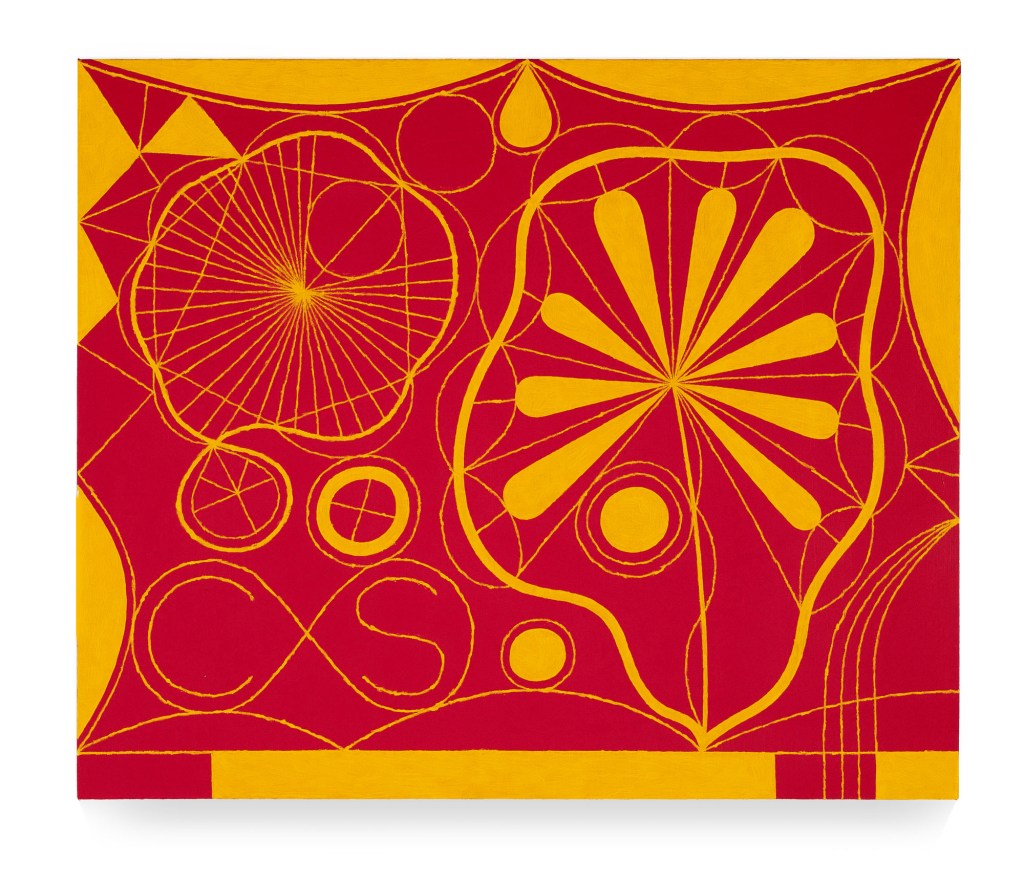
Cary Smith’s Distant Thunder, painted in a limited palette of mustard yellow on red, is a kinetic, highly entertaining piece. Curved lines around the edges evoke a circus tent, while spokes radiating from a central point suggest a unicycle wheel, its whimsical, improvised path traced by other lines. The individual elements cohere as a kind of mystical, esoteric diagram, reminiscent (to me) of the theosophical painters of the turn of the nineteenth to the twentieth century.
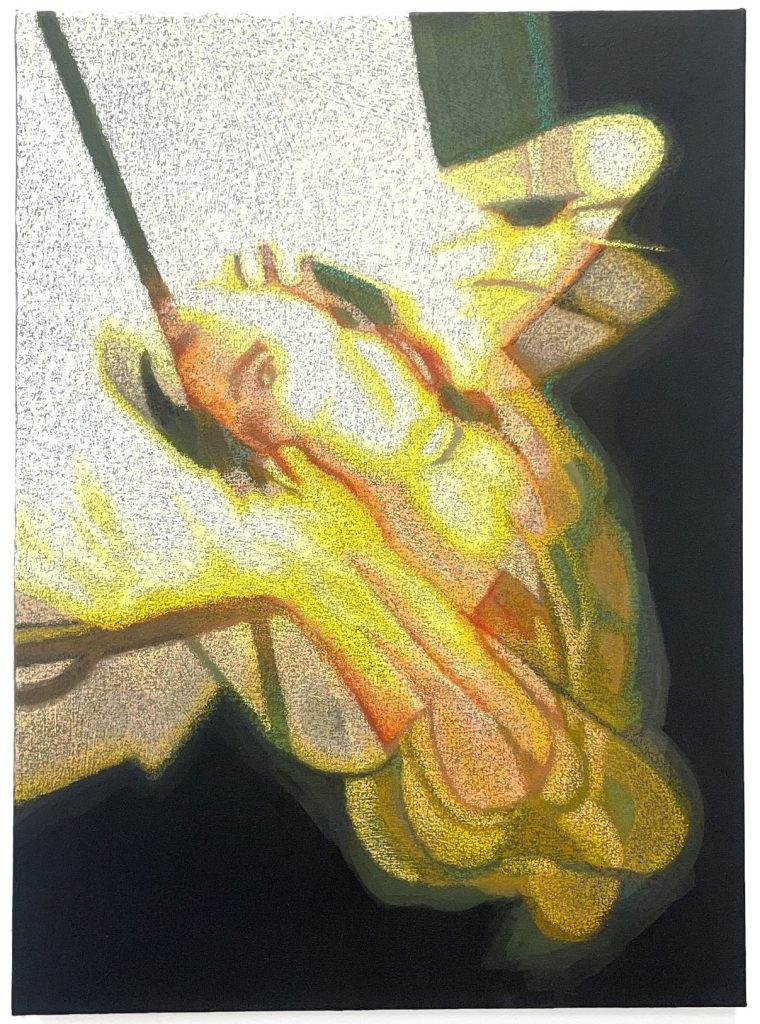
Multi-disciplinary artist Nic Koller’s Promethean is a haunting oil pastel and acrylic work on canvas, capturing the instant in a dark room when a woman, back arched with hands raised to her head, disappears into a bright wave. The nightmarish light has a digital texture, and part of Koller’s project is to explore digital stimulation and exposure and contemplate its extremes.
Areum Yang’s naively styled House on the Lake reflects a dream of a partially remembered abode, surrealist imagery the lens through which Yang, like contemporary painter Larissa Bates, can best capture and make sense of conflicting notions of home. Trees are blue and the sky is candy-cane red. It isn’t clear what the many red specks across the lake might be, but the landscape appears off-kilter, unwell.

A house also foregrounds Robert Zurer’s And There Was No One Left to Speak for Me. It seems to cast its eerie light onto surrounding geodic forms. The smoke emerging from the chimney in round puffs evokes a cartoon thought cloud, and a pair of doors remind me of the elongated oval eyes of a Mickey Mouse character. While Zurer often explores the unknown through mythological renditions of mysterious beings, this piece more sharply suggests the sentience of non-humans. His stance on cosmic mystery is perhaps ironic, or at least less than fully earnest.
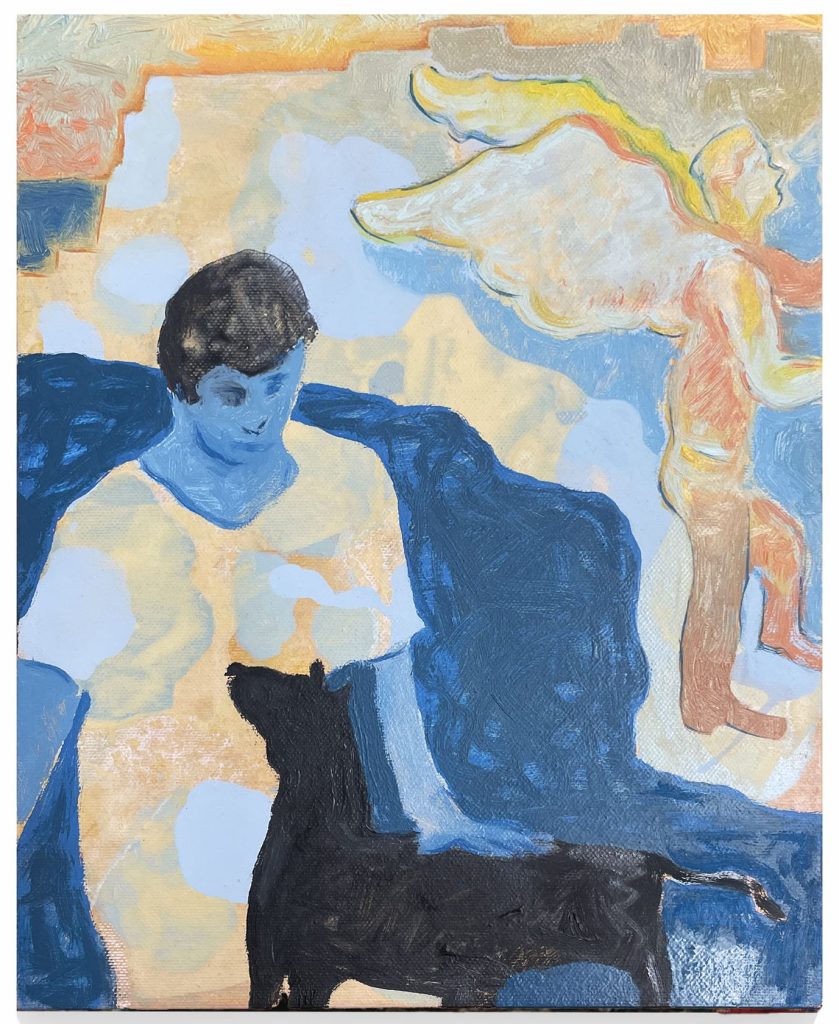
Works by Sam Bornstein, Elisa Soliven, and August Ravn all employ muted blues, grays, and pinks. Bornstein is interested in modes of care and how people generate comfort. In Trio (Fort), a figure pets a jet-black dog as they gaze at each other. Strain and anxiety seem to exit the figure’s body in the form of an ascending angel. In Soliven’s witty vessel Horseshoe Crab #8, the body retains cultures, ancestries, archaic traditions, and totems. Ravn’s oil-on-wood painting is more architectural than biomorphic but exhibits a compelling tension between two orbs that appear precariously connected by a small red square as they pull in opposite directions. Spotting such incidental kinships is one of the joys of visiting this large group show.



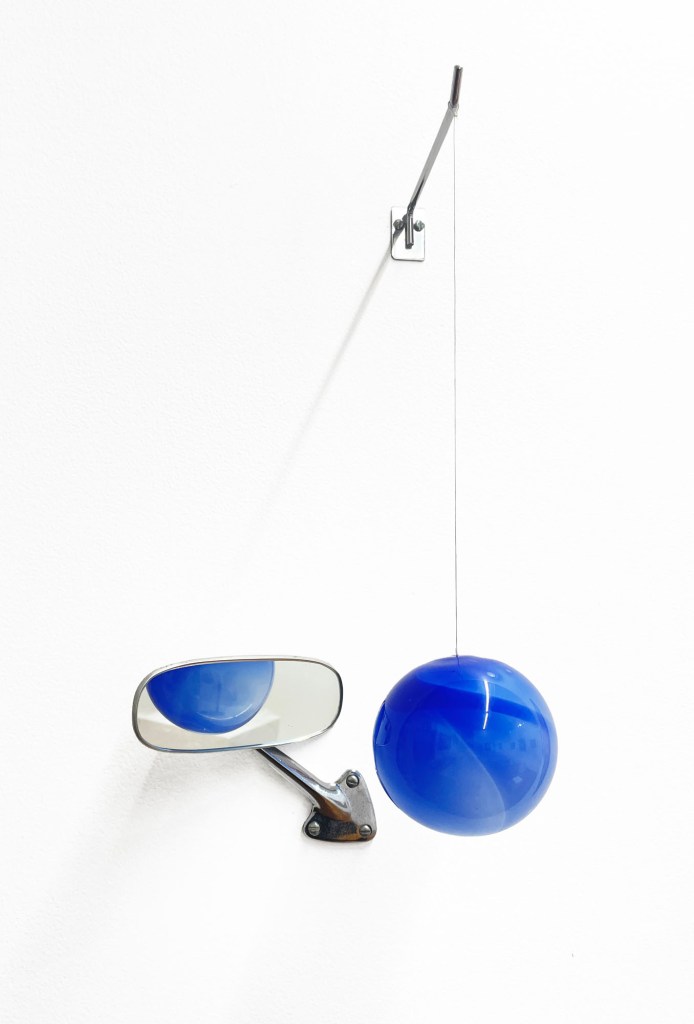
Among the most inventive and enigmatic pieces at “La Banda” is Inna Babaeva’s Don’t Get Me Wrong, which encompasses readymade items mounted to the gallery wall, including a side-view mirror from a classic car and above it a chrome peg used for retail store displays. Straddling the arbitrary lines between the sacred and profane, precious and quotidian, a hand-blown cerulean glass ball hangs off the end of the peg from a wire. Glistening in the mirror and installed in a corner of the gallery, it reflects a dozen or so other pieces – disparate works in warm conversation.
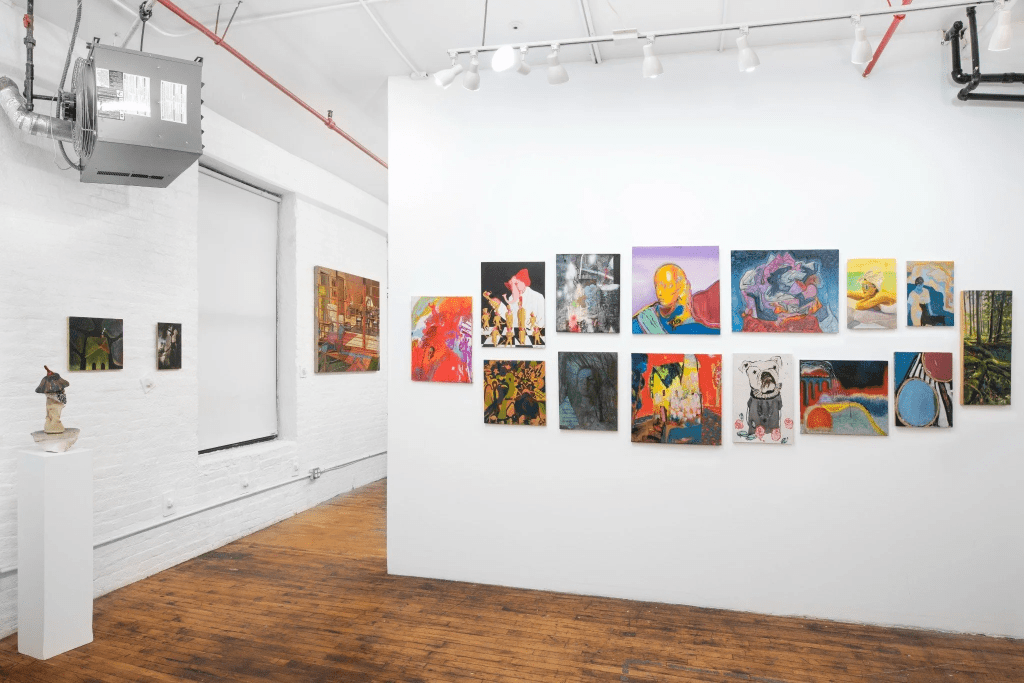
“La Banda,” Tappeto Volante Projects, 126 13th Street, Brooklyn, NY. Through March 15, 2026.
About the author: Jonathan Agin is a New York-based literary agent.