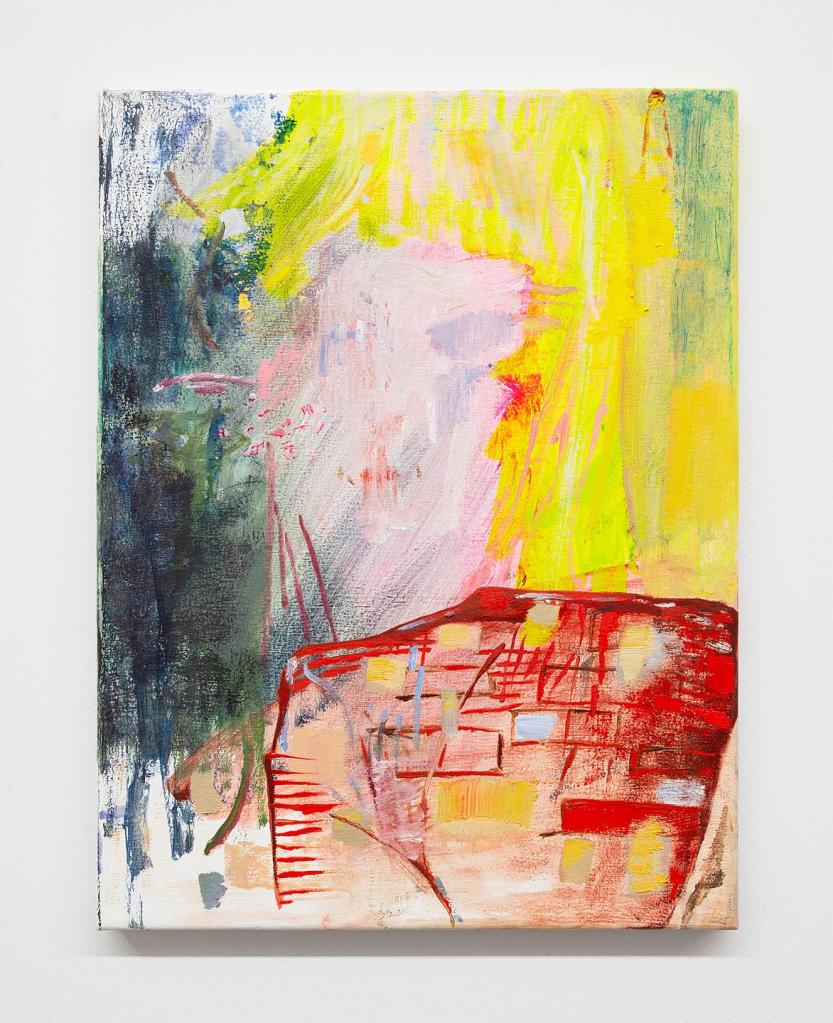
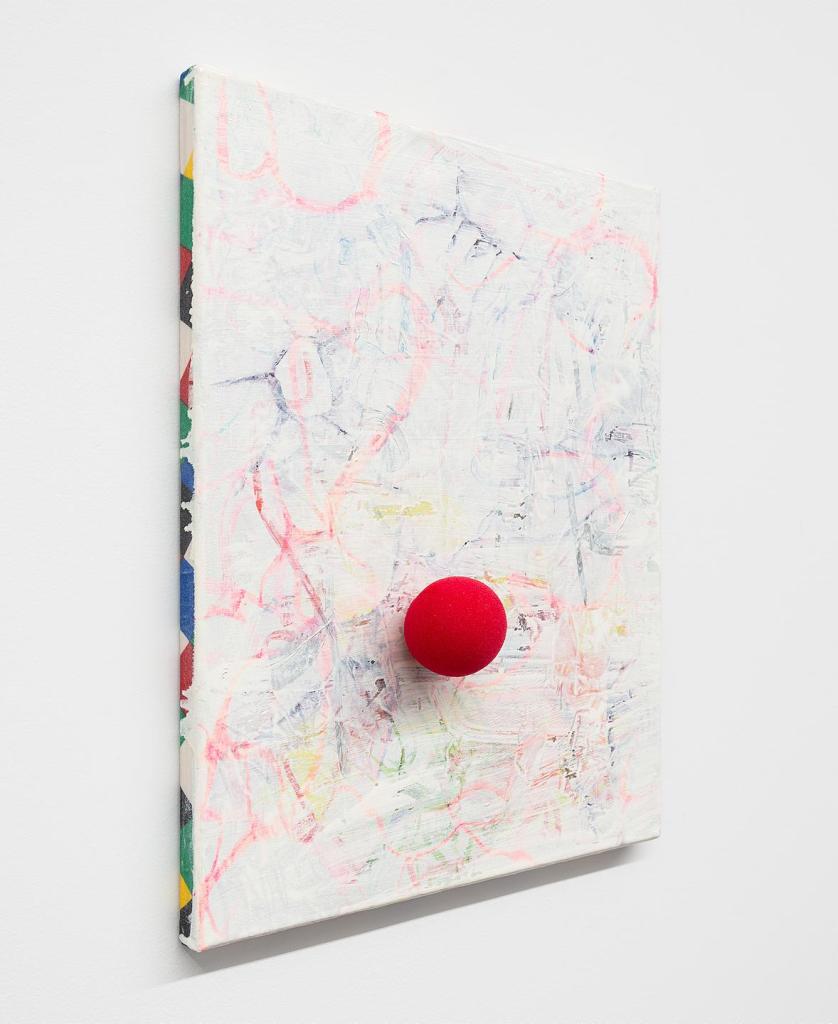
Contributed by Jonathan Stevenson / Whitney Claflin’s work, now on view in her solo exhibition “Pinky’s Where” at Derosia, is winningly deceptive, like the title’s double-entendre. Consider the paintings Emma in Tarzana and Mr. Triste. At first blush, they seem nonchalantly wise-ass and a little frustrating, the first an offhand quip about internet celebrity and influencer supreme Emma Chamberlain, and the second, featuring a found clown nose pasted onto a surface of obdurately tentative color and line, a jaunty aesthetic shrug. Look a little longer, and a considered integrity emerges in the de Kooning-esque abstract brinkmanship of the one and the measured Rauschenbergian wit of the other. Both distill the durable struggle that adults – artist and writer included – face, per Corinthians, of putting aside childish things.

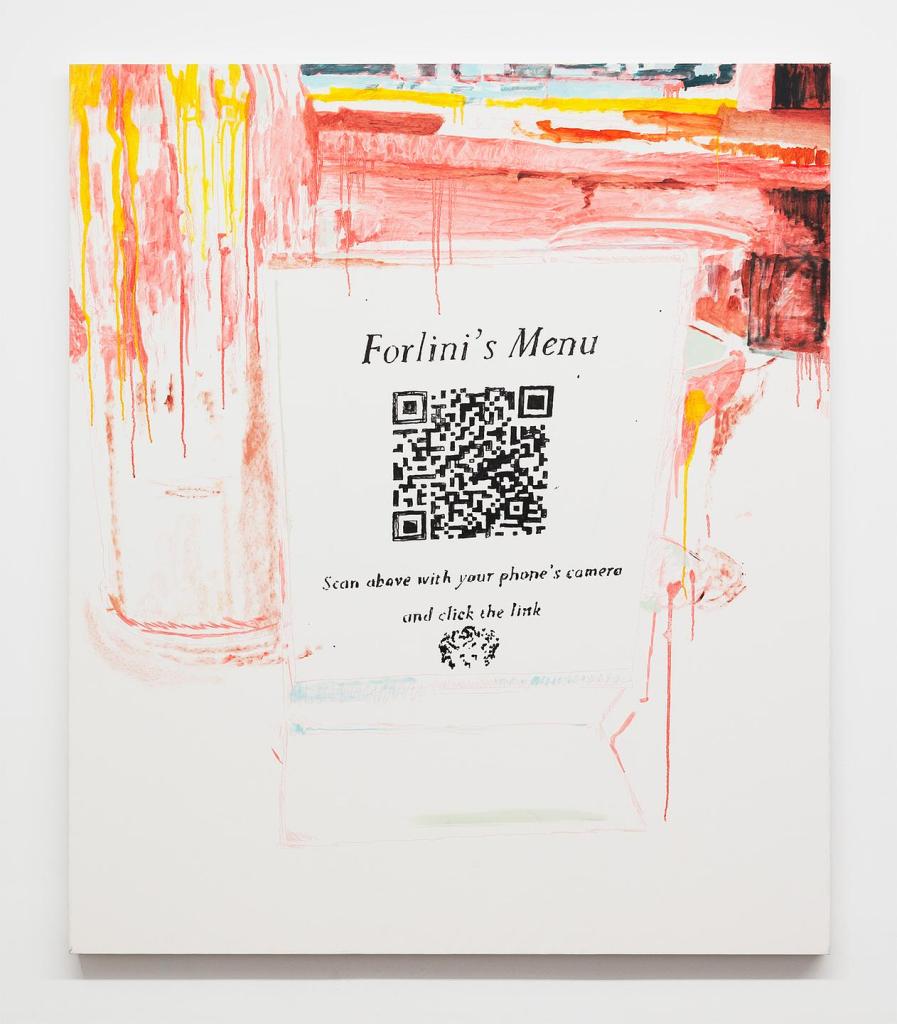
Even so, Claflin does not abjure complexity. In The Narrator, painted flowers cover the cross-section of a tree trunk, occluding its age rings and intimating human storytellers’ unreliability. Untitled (for Walter), a painting of a QR code restaurant menu, registers coy frustration with digital mediation as well as genuine tribute to a now departed eatery, not to mention her painterly chops and love of the artmaking process. In ZaZa City, a single giant flower flanking what presumably is one of the eponymous NYC weed dispensaries, shrouded in sooty fog, could be reflect both faith in and uneasiness about slackerdom. Works such as Noon, Theater, and, most explicitly, Disappear Here convey the sheer joy accompanying the fait accompli of having stubbornly opted out of the whirl for an insular moment. In the side room is Martini’s Traum, a preposterously small drum set on a bearskin rug, perhaps signifying, past the giggles, that the rec-room innocence of youth recedes with scale, which may be why some people are reluctant to go big in life.
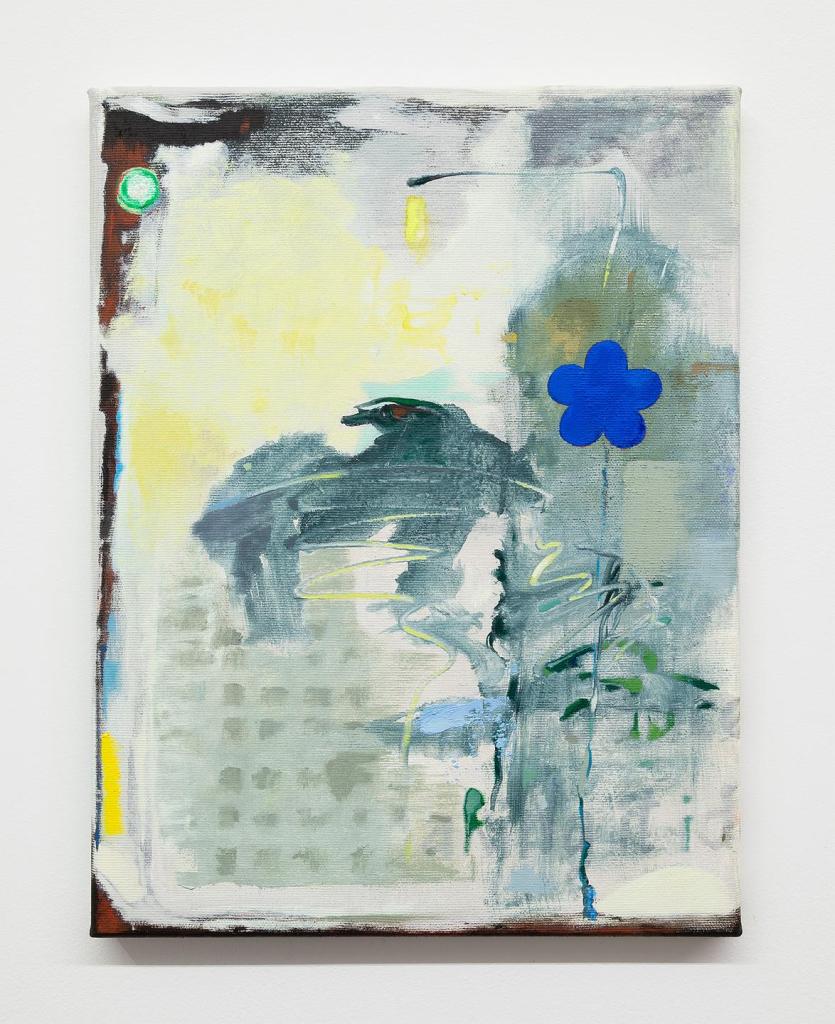

Yet Claflin never surrenders to juvenile escapism or utopianism. Sinister forces lurk in the ironically orange The Green Room, with its Munch-like silhouettes, and the florid Live Tonight! (The Emmas), which seems about as celebratory as a wake hosted by Rothko. Cinema, depicting frayed masking or foul leaking water besmirching a yellow screen, offers no elegiac thrum or comely usher à la Hopper, instead observing the plangent diminishment of the moviegoing habit under the weight of streaming platforms and pandemic fears. 4 July, presenting the shallow illumination of mottled and distinctly un-spacious skies, takes fond lament of past wonder national; see also the obliviously undignified bald eagle, grounded and surreally rusticating, in the ceramic-and-grass OMG I Wish You Guys Could Taste This. The sublime and the worldly hover in undisguised tension in A Side, Antic Basked Pianist, Coffee Mug, and the elegantly austere Grape Celsius.
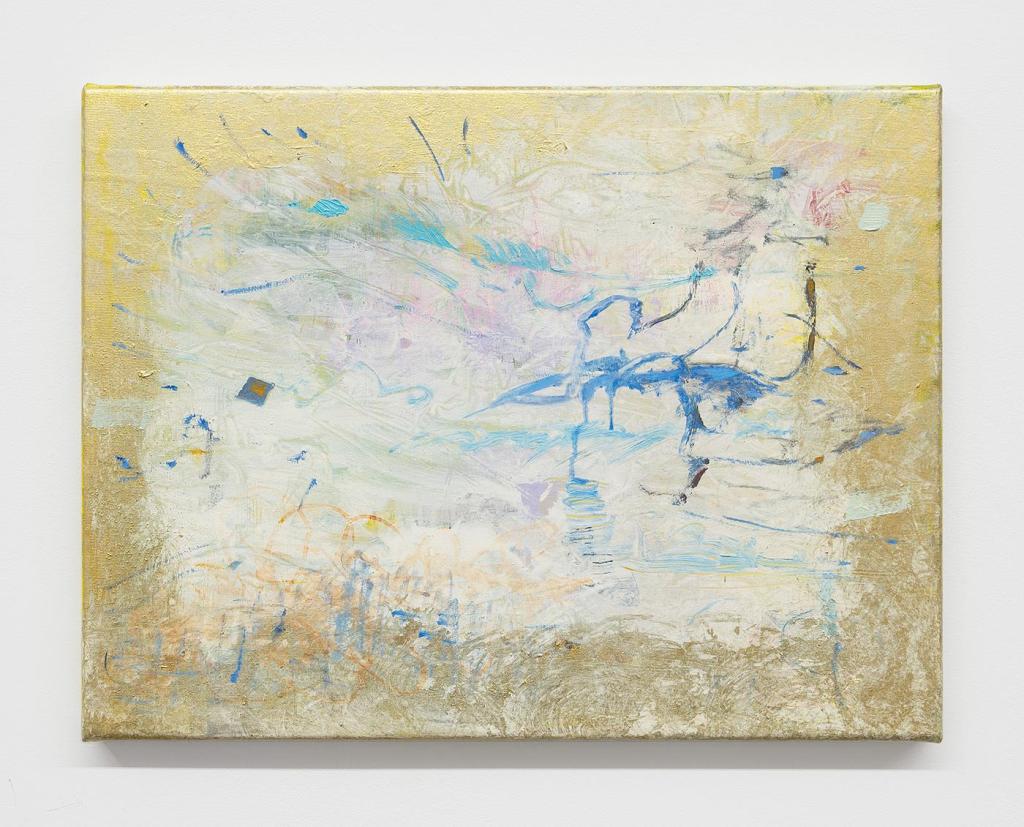
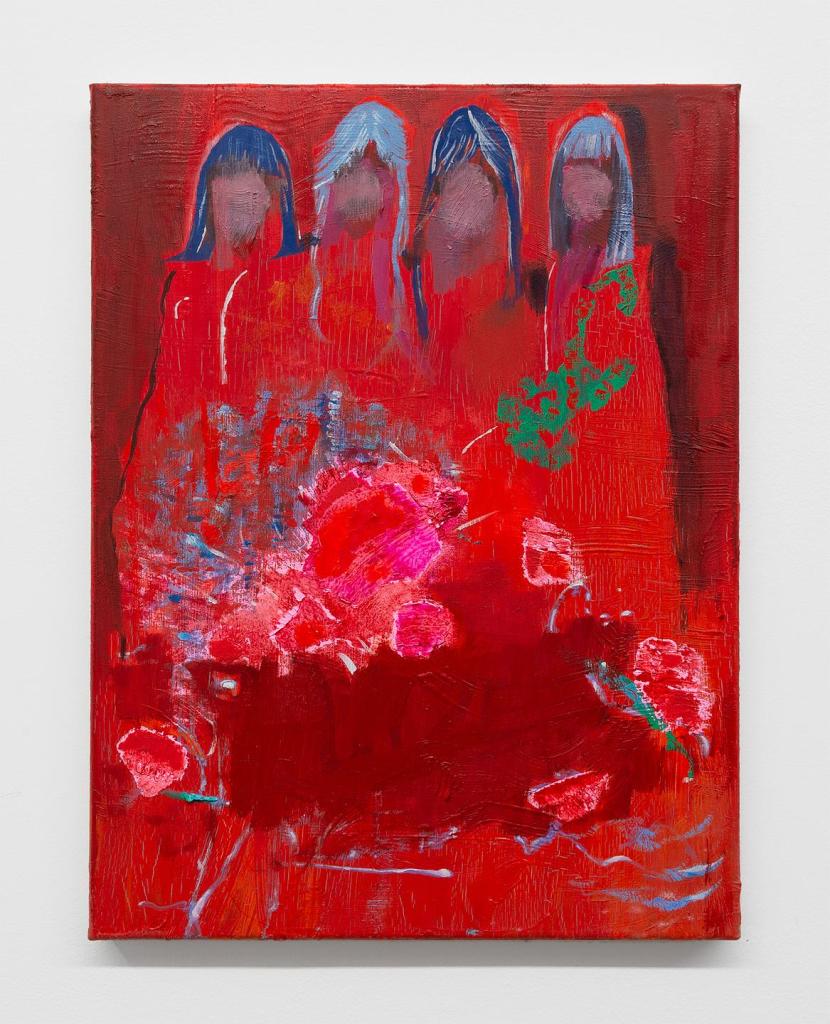
Knowing, resistant innocence seems pervasive – though subtle – in Claflin’s eclectically supple show. Witness the exquisitely calculated vagueness of Buddy Holly (find the hornrims in this picture), Trixie, and Beloved Traveler, all of which seem to coolly defy representationalism and, metaphorically, over-seriousness. This is casualism strategically deployed. Capping the message, she playfully thwacks the traditional gallery experience by interjecting kitschy wallpaper and ceramics, enigmatic text, decals, magazine clippings, and other ready-made ingredients – an impulse intuitively captured in a smartly targeted painting, cagily untitled, of an A slipping the boundaries of the circle that encloses it. In an uncommonly cogent gallery statement, Harry Tafoya deconstructs JD Vance’s smirking “childless cat ladies” crack, suggesting, in contextualizing Claflin’s work, that the pull of pre-pubescent life is an irrepressible force of human nature and nothing to be ashamed of. Claflin maps that enduring tug against the imperatives of maturity. Don’t ask her to grow up. As she triumphantly implies, it’s not really an option for a true adult.
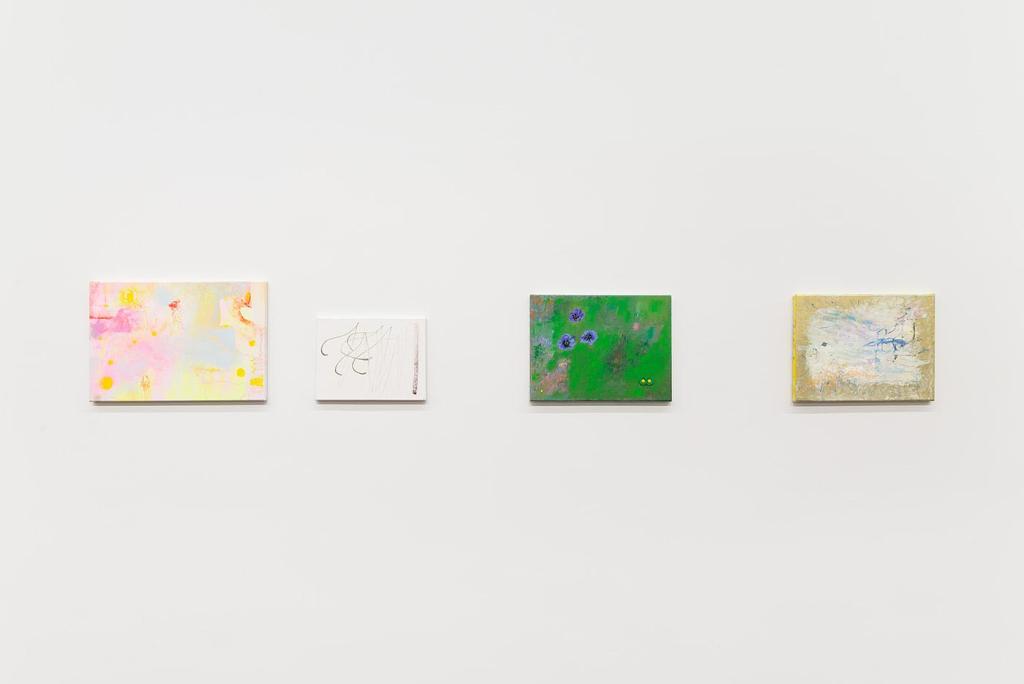
“Whitney Claflin: Pinky’s Where?,” Derosia Gallery, 197 Grand Street, 2W, New York, NY. Through October 19, 2024.
About the author: Jonathan Stevenson is a New York-based policy analyst, editor, and writer, contributing to the New York Times, the New York Review of Books, and Politico, among other publications, and a regular contributor to Two Coats of Paint.