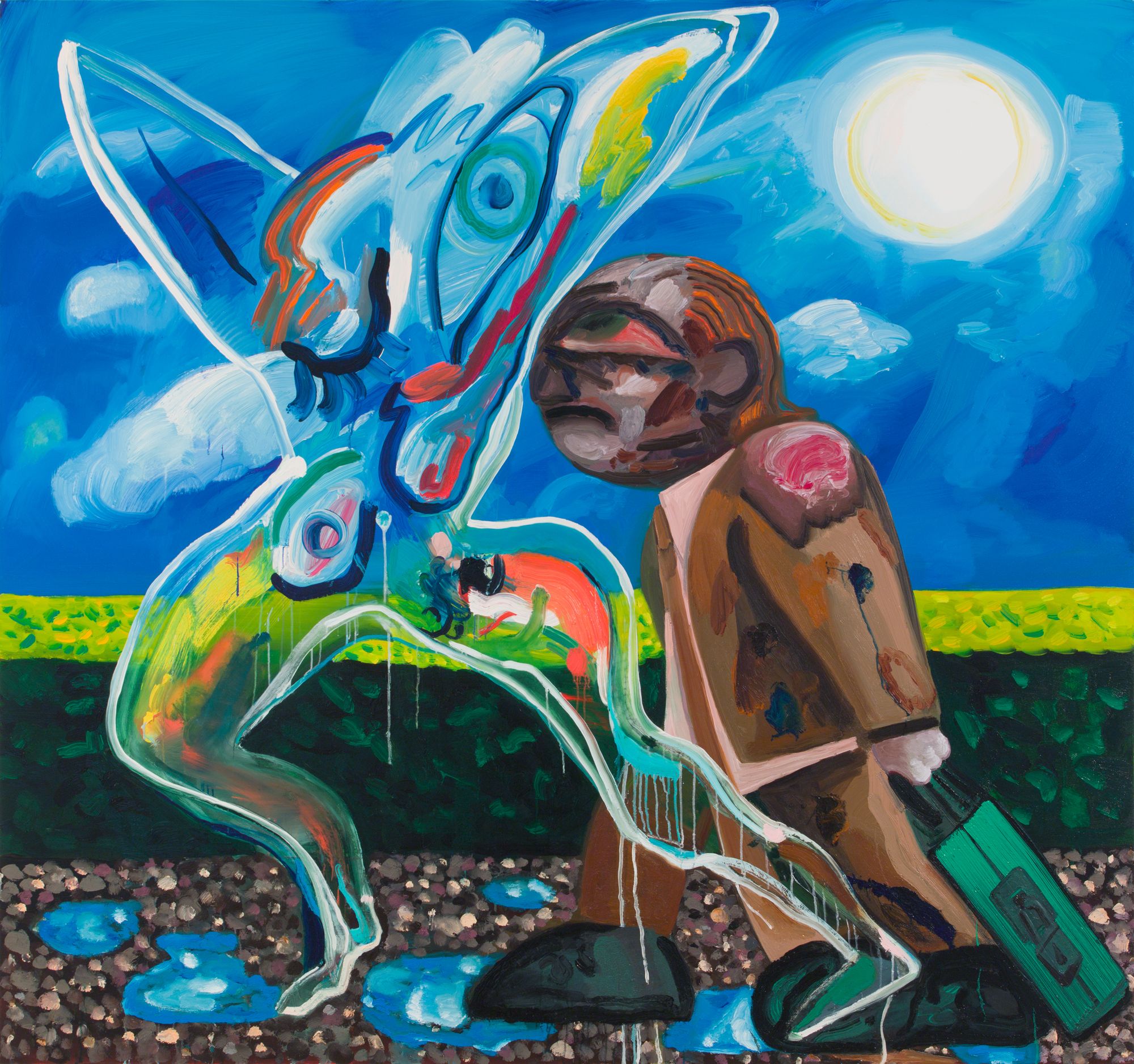
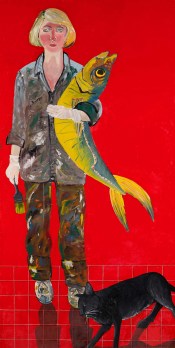
Contributed by David Carrier / Joan Brown’s retrospective at the Carnegie Museum of Art in Pittsburgh includes some 40 paintings, most of them large, and a couple of sculptures. The high, white-walled galleries on the top floor of the museum afford her paintings ample room to breathe.
Tag: figurative
Mark Ryan Chariker’s Romantic No-Man’s-Lands
Contributed by Patrick Neal / Mark Ryan Chariker?s paintings have a romantic, brooding quality that sometimes leans toward the Gothic. In All the Time in the World, his second solo show at 1969 Gallery in Tribeca, he paints youthful figures residing in lush woodlands or dream-like interiors who behave somewhat like fl?neurs, passively inhabiting time and space. These medium scale works in oil on linen and canvas are suffused with a glowing golden aura, and are defined by scenes that wistfully overlay the present onto the past.
Body Language at The Painting Center
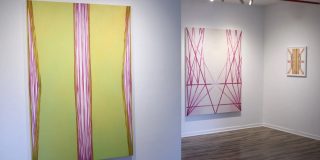
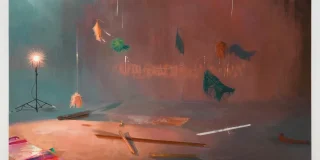
Contributed by Carol Diamond / Now on display at The Painting Center, the group exhibition titled The Body in Question, a phrase cheekily resonant of a coroners report, explores the body as a vessel for communicating experience through painting. Curators Ophir Agassi and Karen Wilkin have adroitly presented a diverse group of ten distinguished contemporary painters connected by their focus on the human figure.
Jennifer Packer’s tender distance
Contributed by Jonathan Stevenson / Its quite a feat for a figurative painter to achieve both intimacy and remove simultaneously, but Jennifer Packer accomplishes just that in The Eye Is Not Satisfied With Seeing, the vibrant survey of her work at the Whitney.
Bad Boyfriends and Pink Bathers : A conversation with Janice Nowinski
Contributed by Sangram Majumdar / On the occasion of her first exhibition, beautifully installed at Thomas Erben Gallery, Janice Nowinski and I talked about how time presents itself in every aspect of her paintings – from references to art and personal histories, to the very material qualities of the work.
Ilana Savdie: Carnival abstraction
Contributed by Paul Laster / Blurring the boundary between abstraction and figuration, Ilana Savdie makes colorful canvases that take the eye on a rollercoaster ride […]
Medrie MacPhee, David Humphrey, and the power of recognition
Contributed by Jonathan Stevenson / In the 1940s, Philip Guston noted that the problem with figurative art was that it vanishes into recognition. By 1960, […]
By Laurie Fendrich / Critics have been lavish in their praise of the Brown, queer-themed figurative paintings by the Pakistani-born Brooklyn artist Salman Toor, currently […]
Interview: Stalking Deborah Brown’s paintings
Contributed by Elisabeth Condon / I�ve been stalking Deborah Brown’s paintings on Instagram, excited about a new series of still lifes. As far as I […]
Interview: Julie Heffernan talks about writing her first graphic novel
Contributed by Rebecca Chace / Julie Heffernan is primarily known for her large-scale figurative paintings that seamlessly merge a rococo sensibility with contemporary content. Since […]
Vida Americana: A grand hemispheric embrace
Contributed by Jonathan Stevenson / The Trump administration has tried to physically cordon off Mexico from the United States, and presumably would just as soon […]
Interview with Gideon Bok: “The color I see”
Contributed by Sangram Majumdar / I have known Gideon Bok’s paintings from before I knew Gideon. Like many of his musical idols, he has an […]
Susan Rothenberg: Hope and discontent
Contributed by Sharon Butler / Susan Rothenberg’s invariably forceful and confident paintings have a beguiling twitchiness, created out of layers of agitated brushwork from a restless hand. In her latest solo at Sperone Westwater, she continues to embrace a non-serial approach, presenting paintings and drawings of various objects and animals she encounters in everyday life. Two of the paintings, Stone Angel and Buddha Monk, appear to be images of inanimate objects, although painted quite differently from each other.
Amanda Church: The contemporary gaze
Contributed by Adam Simon / One of the under-appreciated aspects of art viewing is the way that a given work establishes a certain relationship with a viewer. Mark Rothko famously claimed that “lots of people break down and cry when confronted with my pictures.” He may have been trying to fend off a formalist reading of his work, but I can’t help wondering about the type of relationship he posits in that quote. In Amanda Church’s fine exhibition “Recliners” at High Noon, a very different type of relationship is established, in which the object playfully attunes the viewer to the knowledge and predilections he or she might bring to the experience of looking. Don’t expect to cry, but do prepare to be winked at.
William Powhida’s inquisition
Contributed by Jonathan Stevenson / For a while it looked as though William Powhida might be painting himself into an existential corner. His mission was to […]